Web Development Company in Ahmedabad: Faster Websites for Better Google Rankings
A website can make or break the first impression of your business. People may discover your brand through search, social media, or referrals, but their decision to stay or leave often depends on one thing — how your website performs.
If a page takes too long to load, most visitors will leave before they even read your content. If buttons take too long to respond or page elements move while loading, trust drops instantly. These small performance issues affect user experience in ways many businesses do not realise.
That is why website performance has become more important than ever.
Google introduced Core Web Vitals to measure how real users experience a website. These metrics focus on loading speed, responsiveness, and visual stability. They are now part of Google’s ranking signals, which means your website performance directly affects visibility.
For businesses looking for a trusted web development company in ahmedabad, Core Web Vitals optimisation is no longer optional. It has become part of building a website that ranks well, performs well, and converts better.
Google explains page experience and performance signals in detail here:A fast website is no longer just a technical advantage. It is a core part of how users perceive and interact with your brand online.
What is Page Experience?
Page experience refers to how users feel when interacting with a webpage. It goes beyond just the information presented and focuses on usability, speed, stability, and overall satisfaction. Google evaluates this using a set of signals that include:
1. Core Web Vitals (loading, interactivity, visual stability)
2. Mobile friendliness
3. HTTPS security
4. Safe browsing
5. No intrusive interstitials (pop-ups)
These signals collectively determine whether a page provides a smooth and user-friendly experience.
Understanding Core Web Vitals :
Core Web Vitals are designed to measure how users interact with your website in real time. They are based on real-world browsing behaviour, not just technical testing.
The first metric is Largest Contentful Paint (LCP). This measures how quickly the main content on the page becomes visible. Usually, this means the banner image, heading, or hero section. Google recommends that this should happen within 2.5 seconds.
The second metric is Interaction to Next Paint (INP). This measures how quickly your website reacts after a user clicks, taps, or interacts with it. If there is a delay, the website feels slow.
The third metric is Cumulative Layout Shift (CLS). This measures visual stability. If content moves while loading, users often click the wrong thing or lose their place.
Google’s web performance resource explains these metrics in simple terms:These metrics matter because they reflect actual user experience. Not assumptions. Real behaviour.
Why Core Web Vitals Matter for SEO ?
SEO has changed.
Ranking well on Google is no longer only about adding keywords or building backlinks. Google now evaluates how people experience your website after they arrive.
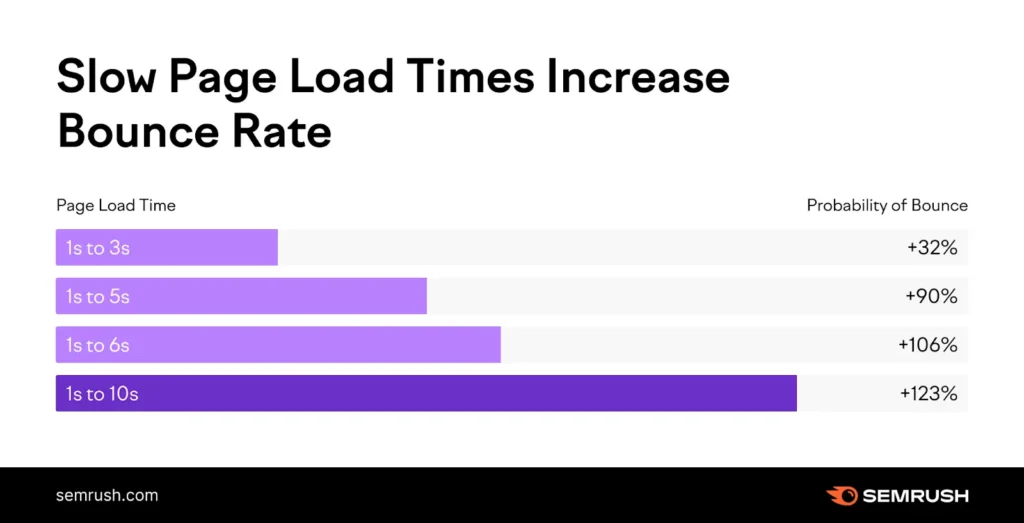
If your website loads slowly or feels unstable, users leave quickly. That creates poor engagement signals. And those signals can affect rankings.
According to Google’s consumer research, when page load time increases from one second to three seconds, bounce rates rise significantly.
That is why businesses investing in web development services india are now focusing on performance-first development.
The business impact of strong Core Web Vitals includes:
1. Better search visibility
2. Lower bounce rates
3. Higher user engagement
4. Better lead conversion
A fast website improves both SEO and user trust.
Why Loading Speed Is Often the Biggest Issue ?
When users visit your website, they expect to see content immediately. If the main content takes too long to load, they lose patience. That is where LCP becomes important.
Poor LCP is usually caused by heavy images, weak hosting, or too many scripts loading at the same time.
Many businesses upload large images directly without compressing them. This increases page weight and slows loading.
Businesses using cms web development services often face this issue because website content changes regularly, and optimisation gets missed.
According to HTTP Archive, images are still one of the biggest reasons websites become slow.
A few practical ways to improve loading speed include:
1. Compressing large images before upload
2. Using WebP image formats
3. Improving server response time
4. Reducing unnecessary scripts
These changes often create noticeable improvements.
If you are planning a performance-focused website build, Digifinity’s website design and development services can help.
Why Website Responsiveness Matters ?
A website should feel quick. Not just load quickly. Respond quickly too. This is where INP matters. Imagine clicking a form button and waiting for a response. That delay creates uncertainty. Users often click again or leave.
Poor responsiveness usually happens because of:
1. Too much JavaScript
2. Third-party tools
3. Chat widgets
4. Pop-ups
Businesses using custom web app development services often improve this because custom systems avoid unnecessary code.
Google Lighthouse helps identify responsiveness issues. Lighthouse shows what is slowing your interactions and where performance can improve.
For businesses building custom applications, performance-focused web app development service creates better control.
At Digifinity, we help brands grow with smart digital strategies and creative solutions.
Every service is focused on delivering real, measurable business results.
Explore Our Services
Why Layout Stability Improves User Experience ?
Most users do not know what layout shift means. But they know when a website feels unstable. A page that moves while loading feels frustrating. Buttons shift. Text jumps. Images push content down. This affects trust.
Businesses using responsive web design services usually prevent this during development by reserving proper space for content.
Google’s CLS guide explains why stable layouts improve usability: A stable website creates a smoother experience. And smooth experiences keep users engaged.
Common Problems That Slow Down Websites:
Most websites do not become slow overnight. It happens over time. Extra plugins get added. Heavy themes get installed. Scripts increase. Media files become larger. These small issues build up.
The most common performance problems include:
1. Low-quality hosting
2. Plugin overload
3. Large media files
4. Unused CSS and JavaScript
Businesses using responsive web development services often improve speed simply by removing unnecessary elements.
Sometimes improving performance is about simplifying. Not expanding.
If your website depends on custom business tools, Digifinity’s custom software development solutions can improve performance.
Practical Steps to Improve Core Web Vitals :
Improving Core Web Vitals does not always mean rebuilding everything. In many cases, practical changes improve speed significantly. Image optimisation should always be the first step. Compressed images reduce load times immediately. Hosting quality should also be reviewed. A better hosting environment improves server speed. Caching improves repeat visits.
A CDN improves global delivery speed.
Cloudflare explains how CDNs improve performance here:
A practical performance strategy usually includes:
1. Image optimisation
2. Better hosting
3. Browser caching
4. Reduced plugin usage
These actions create faster loading and better usability.
For e-commerce businesses, speed is even more important because slower product pages affect sales. Digifinity’s e-commerce development services support performance-focused online stores
Why Mobile Performance Is Critical ?
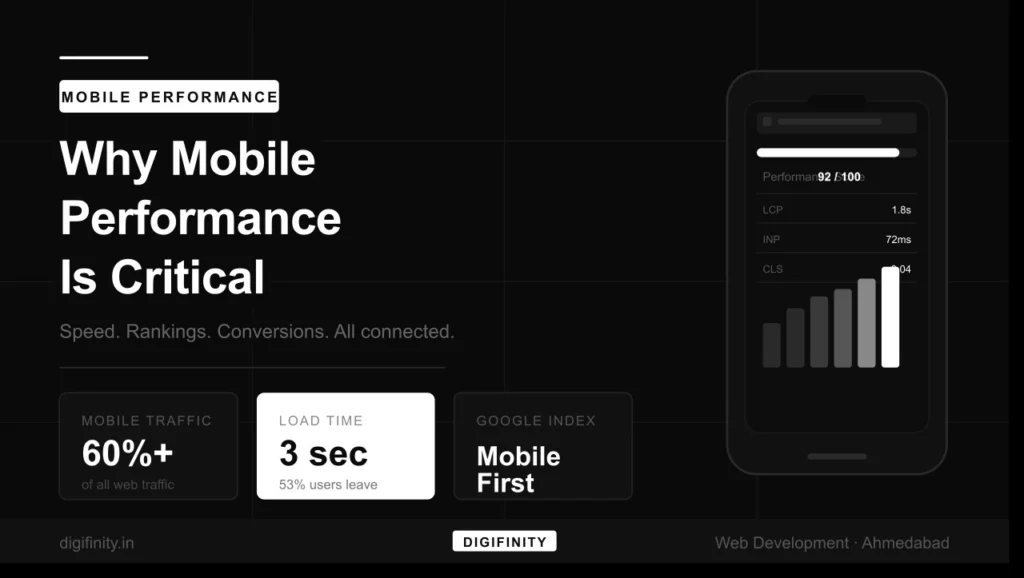
Most website traffic now comes from mobile users. Google uses mobile-first indexing. That means your mobile website performance directly affects rankings. A responsive website should not only fit smaller screens. It should stay fast and easy to use.
Businesses investing in responsive web development services improve mobile performance through better layouts, lighter assets, and simpler interactions.
Google Search Console helps monitor Core Web Vitals and mobile usability. Search Console provides direct performance insights from Google.
For businesses focused on mobile-first customer journeys, Digifinity’s mobile app development services offer scalable solutions.
Tools to Monitor Core Web Vitals :
Performance should be reviewed regularly. Without testing, issues often stay hidden.
The most useful tools include:
1. Google PageSpeed Insights
2. GTmetrix
3. Google Lighthouse
4. Google Search Console
These tools help identify performance problems early.
Conclusion :
Website performance affects more than technical scores. It affects how users feel when they visit your website. It affects how Google ranks your pages. And it affects how often visitors turn into customers. Core Web Vitals help businesses understand where performance problems exist and how to fix them. For businesses looking for a reliable web development company in ahmedabad, focusing on Core Web Vitals is one of the smartest ways to improve long-term digital performance. Because users may forget what your website said. But they will always remember how it felt to use it.
Businesses also strengthen their digital ecosystem by expanding beyond websites into mobile app development services to ensure consistent performance, faster interactions, and a seamless user experience across all devices.