
Why Website Redesign Matters in 2026 ?
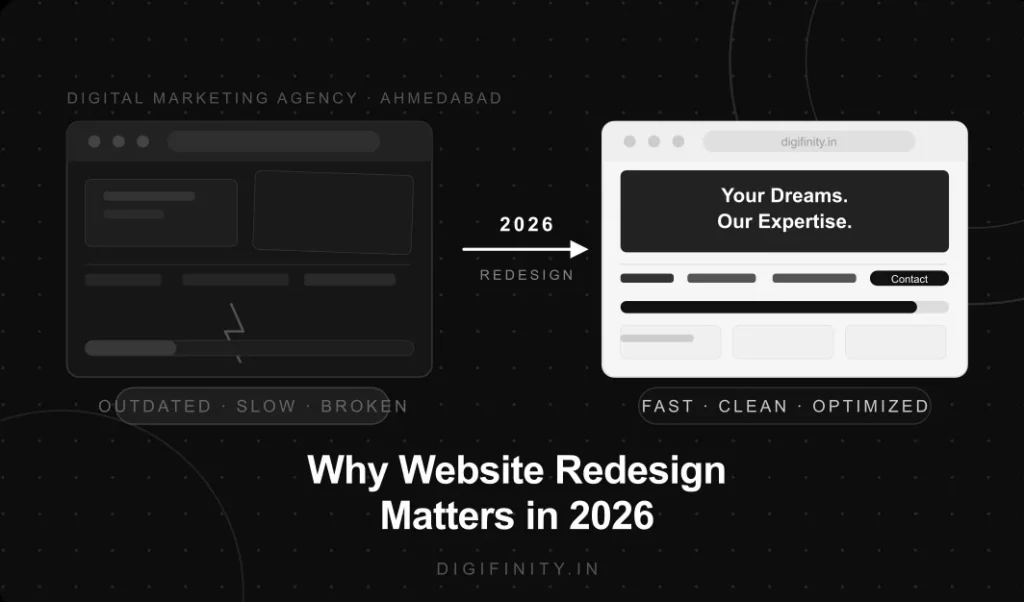
Honestly, in 2026 a website redesign isn’t about making things “look better” anymore. That’s the old thinking. These days, it’s more about whether your website actually works when real people land on it.
Because users don’t care how much effort went into the design. If the site feels slow, confusing, or even slightly off, they just leave. No second thought.
And that’s usually how redesign conversations start anyway. Not “we want a new design,” but “our traffic is dropping,” or “people are not contacting us anymore,” or “SEO isn’t working like before.” And when you actually look deeper, it’s rarely just one issue. It’s usually a mix—slow speed, messy structure, outdated content, or mobile experience that never got updated properly.
A lot of businesses still make the mistake of thinking redesign is mainly a visual thing. New colors, new layout, new homepage. But that’s only the surface.
A proper redesign starts much earlier than design. It starts with understanding what’s broken and why people are not staying.
That’s also why when you work with a web development company in Ahmedabad, the first thing they usually do isn’t design mockups. It’s checking how users behave, where they drop off, how fast the site loads, and whether the SEO structure is even stable. Only after that does real redesign work begin.
Because at the end of the day, a website isn’t supposed to just exist. It’s supposed to help your business grow.
The Role of a Web Development Company in Ahmedabad:
If you’ve ever been part of a redesign, you already know it’s not a clean, simple process. There are too many things happening at the same time.
Designers want things to look modern. Developers want things to not break. SEO people are worried about rankings. Content needs to be rewritten. And somehow, all of it has to come together without losing what was already working.
This is where experience actually matters.
A good web development company in Ahmedabad doesn’t treat redesign like “changing the website.” They treat it more like fixing and rebuilding a system that’s already running.
Because a website is not just pages. It’s structure, performance, logic, content flow, and user experience all mixed together.
So their focus usually goes beyond visuals. It’s more about things like:
- Making sure rankings don’t crash after launch
- Improving loading speed (because users really don’t wait anymore)
- Fixing mobile issues that were ignored earlier
- Making navigation feel natural instead of forced
- Cleaning up backend so future updates are easier
When all of that is handled properly, you don’t just get a “new website.” You get a site that actually performs better.
1. Start with a UX Audit
Before touching anything, it helps to just watch what users are doing on your site. And this is where most surprises happen. Because what you think is working and what users are actually doing are often two different things. A page that feels important from a business point of view might be getting skipped completely, or a section you assumed was clear might actually be causing confusion and drop-offs without you even noticing it in day-to-day tracking. That’s exactly why a proper website evaluation as part of web design & development services becomes so important before making any redesign decisions.
A UX audit usually shows things like people leaving halfway through a page, ignoring important buttons, or getting stuck in menus that made sense to the team but not to users.
Typical things you notice:
- Users dropping off without scrolling much
- Pages that get traffic but no action
- Buttons that don’t get clicked at all
- Mobile users struggling more than desktop
- Content people skip completely
Once you see this clearly, redesign stops being guesswork.
2. Make Mobile the Priority
Most people are not sitting on a laptop when they visit your site. They’re scrolling on their phone while doing something else. That changes everything. If mobile feels even slightly heavy or confusing, people don’t try to fix it—they just leave.
Mobile-first design is no longer just a trend—it’s the standard way digital products are built today. With Google prioritizing mobile versions for indexing and ranking, it directly impacts not just user experience but also visibility and SEO performance.
This approach is quite similar to what we see in performance marketing, where strategies are designed around user behavior, data, and conversion optimization from the very beginning. When campaigns are structured with performance in mind, every touchpoint is optimized to drive measurable results rather than just reach.
When the mobile experience is smooth and aligned with performance-driven strategies, everything else—from engagement to conversions—naturally improves.
3. Improve Website Speed
Nobody really complains about speed when it’s good. But when it’s slow, you notice it instantly. Even a delay of a few seconds can make a user feel like the site is outdated or not trustworthy. And honestly, most people don’t wait. They just leave.
Search engines also factor this in through Core Web Vitals. The good thing is, speed issues are often fixable without rebuilding everything. Compressing images, cleaning up scripts, and improving caching can already make a big difference.
4. Check SEO Structure Carefully
This is one of those areas where small mistakes can quietly hurt a website. If URLs change without redirects, or pages get removed without planning, rankings can drop and traffic can disappear faster than expected. So during redesign, SEO needs proper attention—not as an afterthought but as part of the process.
Things like redirects, internal linking, metadata, and sitemap structure all need to be planned properly before launch, which is exactly where responsive web development services play an important role in keeping the site structure stable and performance-friendly across devices.
5. Review Your Content
Over time, websites collect a lot of content that just… stays there. Old service pages, outdated blogs, repeated explanations—it all adds up. A redesign is usually the best time to clean this up. Not just delete things randomly, but actually ask: does this still help someone today? If not, it probably doesn’t need to stay.
When content is clean and updated, the whole site feels more focused and easier to trust.
Explore our complete range of digital services built to support every stage of your business growth.
Digifinity delivers solutions across marketing, design, development, and technology
Explore Our Services6. Review Your CMS Setup
Your CMS is basically what you use to run your website every day. If it’s messy or complicated, even small updates start feeling like a task. A good setup makes everything easier—adding pages, updating content, managing SEO. A proper structure built through custom software development makes long-term maintenance much simpler.
7. Strengthen Security
Security usually doesn’t get attention until something goes wrong. But during redesign, it’s actually the right time to fix it properly. SSL, secure login, backups, and firewall protection are basic things now—not optional extras. A secure website also just feels more trustworthy to users, even if they don’t consciously notice it.
8. Focus on Conversions
A website shouldn’t just inform people. It should guide them somewhere. Call it enquiry, signup, purchase—whatever the goal is, it should feel easy and obvious. Most improvements here are actually small things. Better buttons, less complicated forms, clearer messaging. Small changes, but they often make a real difference.
9. Simplify Navigation
If users have to think too much about where to click, something is already off. Good navigation is almost invisible. People just find what they need without effort. If they don’t, they leave. Simple as that.
10. Keep Branding Consistent
When every page feels slightly different, users may not notice it directly, but they feel it. Consistency in fonts, colors, spacing, and layout quietly builds trust over time. It just feels more stable and professional.
11. Connect Business Tools
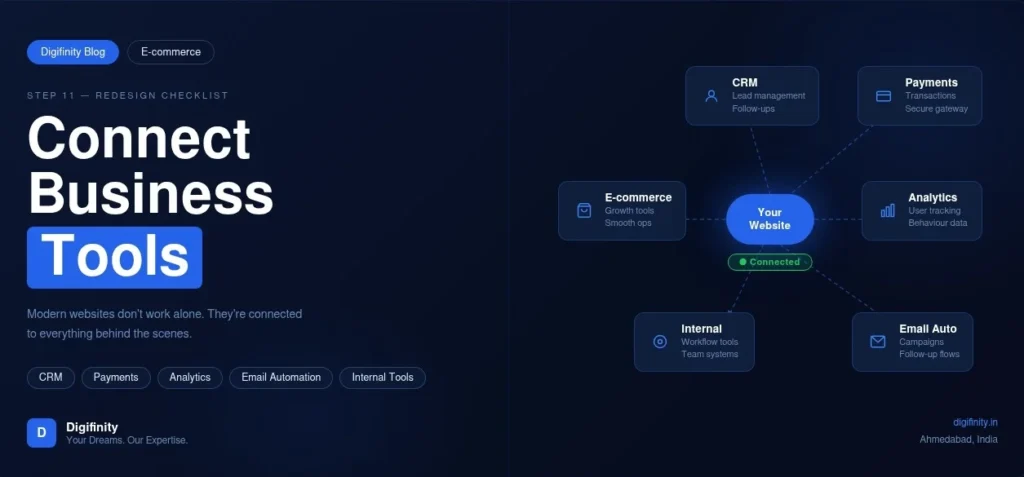
- CRM systems for managing leads
- Payment systems for transactions
- Analytics tools for tracking
- Email automation for follow-ups
- Internal tools for workflow
Modern websites don’t work alone anymore. They’re connected to everything behind the scenes. For growing businesses, SEM (Search Engine Marketing) helps keep everything running smoothly and ensures better visibility, traffic, and conversions.
12. Improve Accessibility
Accessibility is basically making sure your website doesn’t exclude anyone. It helps users with disabilities, but honestly it improves usability for everyone. WCAG guidelines are the standard here.
13. Set Up Analytics Properly
If you’re not tracking anything, you’re just guessing. Analytics tells you what people are doing, where they drop off, and what actually works. Without it, improvement becomes random.
14. Test Before Launch
This step sounds boring, but it saves a lot of trouble later. Things always behave differently when real users start using the site. So testing across devices, browsers, and screen sizes is just necessary.
15. Monitor SEO After Launch
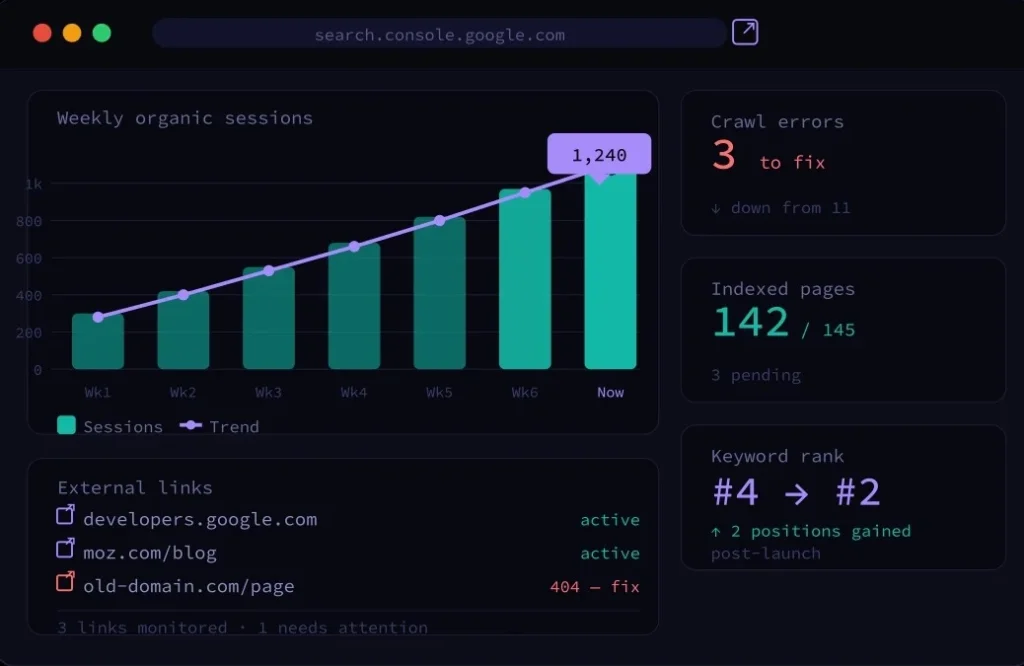
Launching the site isn’t the end. It’s actually when real data starts showing up. You need to watch rankings, traffic, indexing, and errors for at least a few weeks. Google also recommends ongoing monitoring after changes.
Final Thoughts :
A website redesign isn’t really about “making it new.” It’s about making it work better. Better speed, better structure, better usability, better conversions. When it’s done properly, users don’t even notice the redesign. They just feel like the website finally makes sense. And that’s usually the best outcome.