
Is Your Ahmedabad Business Invisible on Google? Here’s Why and How to Fix It:
You put in the work. The website is live, the services are listed, and the business is ready. But every time someone searches for what you offer, your name simply doesn’t show up. Not on the first page. Sometimes not even on the third.
That’s a frustrating position to be in especially when you can see competitors ranking above you who, honestly, don’t seem to be doing anything extraordinary. The gap between them and you usually isn’t about budget or luck. It’s about a few specific things that are quietly working against your visibility. At its core, this is a search engine positioning SEO problem and it’s more common than most business owners realise.
As an Ahmedabad SEO company that has worked with businesses across Pan India, Digifinity has seen this pattern repeat itself across industries and business sizes. According to Google Search Central, search visibility depends on a combination of technical health, content relevance, and authority signals and most businesses are missing at least one of these without knowing it. The good news is that once you identify what’s broken, fixing it is entirely achievable.
The Visibility Problem Nobody Talks About:
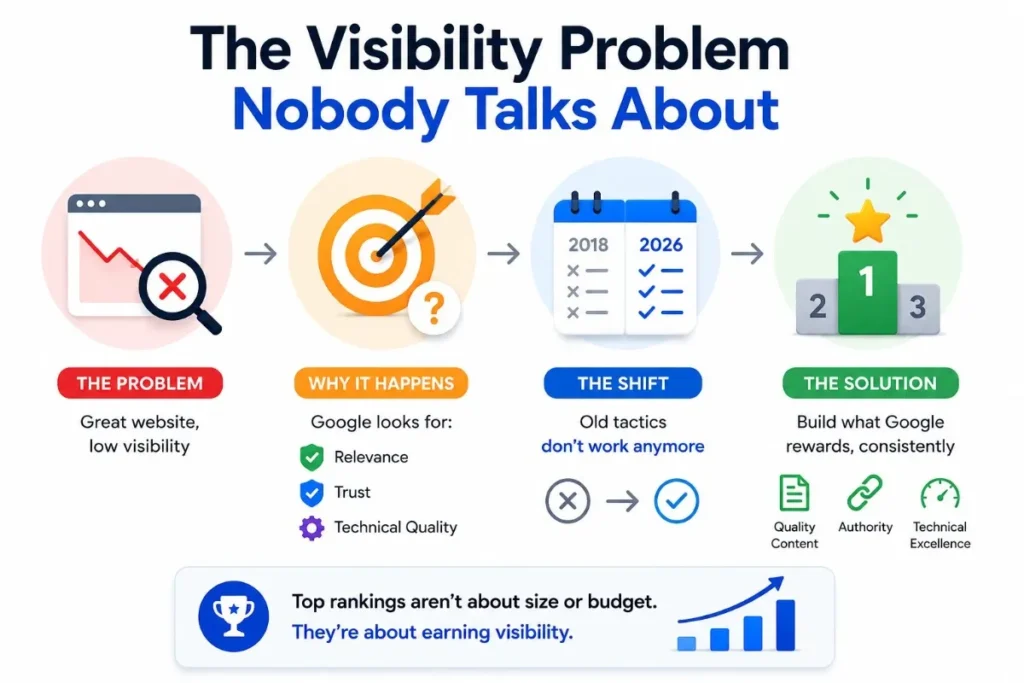
Here’s something worth understanding before we get into solutions. Google isn’t simply looking for the most popular website. It’s trying to find the most relevant, trustworthy, and technically sound result for every single search query. That means even a well-designed, professionally written website can get buried if it doesn’t meet Google’s expectations in the right areas.
What makes this harder is that the goalposts have shifted. A few years ago, you could stuff a few keywords into a page, get some backlinks, and see results. That playbook stopped working a long time ago. Google’s systems have grown considerably more sophisticated, and what worked in 2018 can actively hurt you in 2025.
The businesses consistently appearing at the top of search results aren’t necessarily the biggest or the best-funded. They’re the ones who’ve built their online presence around what Google’s ranking systems actually reward and they’ve done it consistently over time.
Not Sure If Your Site Has Technical SEO Issues?
Digifinity audits websites across Ahmedabad and India to find exactly what’s holding your rankings back crawl issues, speed problems, schema errors, and more. No guesswork, just a clear fix list built around your site.
Explore Our ServiceCommon Reasons Your Business Isn’t Appearing on Google:
There’s rarely one single reason a business isn’t ranking. It’s almost always a combination of issues that compound each other. Here are the ones we encounter most frequently.
Your Website Has Technical SEO Issues
Think of technical SEO as the plumbing of your website. When it’s working properly, nobody notices. When it isn’t, everything else suffers regardless of how good your content is or how strong your brand reputation might be.
Slow loading speeds, broken links, pages that can’t be crawled, missing sitemaps, duplicate content across multiple URLs are the kinds of issues that quietly suppress your rankings without triggering any obvious warning signs. Google’s crawlers visit your website, run into these problems, and deprioritise your pages as a result.
Mobile performance is another area that catches a lot of businesses off guard. Google now indexes the mobile version of your site first. If your website loads slowly or displays poorly on a phone, that directly affects where you appear in search results even for users searching on a desktop.
You’re Targeting the Wrong Keywords
Most businesses start their SEO journey by thinking about the words they’d use to describe their own services. The problem is that your customers often search differently than you’d expect. And the terms that feel most natural to you are frequently the most competitive, dominated by large national brands with years of authority built up behind them.
Effective keyword strategy isn’t about finding the highest search volume terms. It’s about finding the intersection of what your customers are actually searching for, what you can realistically rank for given your current domain strength, and what’s most likely to bring in the kind of visitors who actually convert. Without that clarity, you end up competing for terms you can’t win while missing the ones that could genuinely move the needle.
Your Content Doesn’t Match Search Intent
This one is subtle but it matters enormously. Google doesn’t just match keywords it tries to understand what a person actually wants when they type a particular query. Someone searching for “SEO services Ahmedabad” wants to find an agency they can hire. Someone searching “what is SEO” wants an explanation. These are entirely different needs, and Google serves them with entirely different types of content.
When your page structure, tone, and content format don’t align with what Google believes the searcher wants, it won’t rank even if every technical element is perfectly optimised. Service pages need to feel like service pages. Educational content needs to be genuinely educational. Getting this alignment right is one of the most impactful and most overlooked aspects of SEO.
You’re Ignoring Local SEO Signals
If your business serves customers in specific locations whether that’s Ahmedabad, Surat, Mumbai, or anywhere else in India local SEO signals are a significant part of how Google decides where to place you in results. This goes well beyond just having your address on the website.
Your Google Business Profile, the consistency of your business information across online directories, the relevance of your content to your target locations, and the reviews your customers leave all feed into how prominently you appear in local search. Businesses that neglect these signals consistently lose ground to competitors who’ve put even modest effort into managing them. Partnering with a focused local seo services that understands how Indian markets behave in search tends to accelerate results here considerably.
Your Backlink Profile Is Weak or Non-Existent
When other reputable websites link to yours, Google interprets that as a signal of credibility. The more of those signals you accumulate from genuinely relevant, authoritative sources, the more Google trusts your domain and the more willing it becomes to rank your pages for competitive terms.
The flip side is also true. A website with very few external links, or one that has accumulated low-quality links from spammy sources, will struggle to rank even when everything else is in order. Building a healthy backlink profile takes time and a deliberate strategy, but its impact on rankings is difficult to replicate through any other means.
Most businesses we speak to at our Ahmedabad SEO company have at least two or three of these issues running simultaneously often without realising it. The tricky part is that these problems don’t always trigger obvious warning signs. Your website looks fine, your content reads well, and yet the rankings simply don’t move. That’s precisely why a structured diagnostic approach matters more than jumping straight into fixes.
What Modern Search Engine Positioning Actually Requires?
Search engine positioning in SEO today is less about individual tactics and more about how your entire online presence fits together. Google evaluates your website holistically looking at your content across all pages, the consistency of your messaging, the technical health of your domain, and the external signals that indicate whether you’re considered a trusted source in your field.
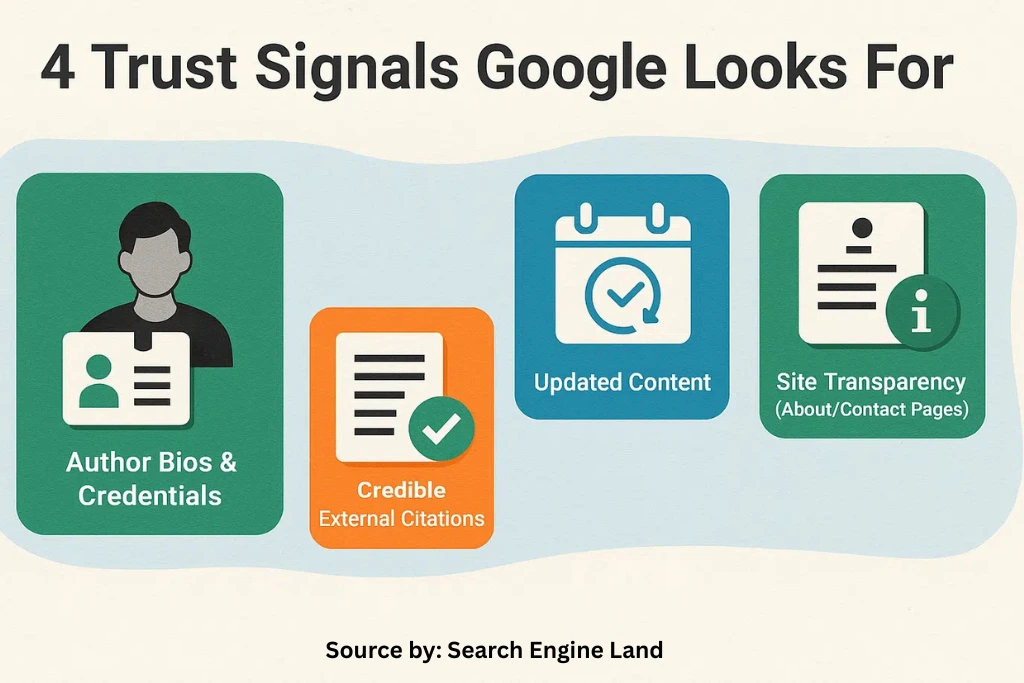
The concept of topical authority has become increasingly important in this context. Rather than having a handful of pages targeting a handful of keywords, businesses that rank consistently tend to build out comprehensive content ecosystems covering a subject from multiple angles, connecting related content through smart internal linking, and demonstrating genuine depth of knowledge across a topic area. Google’s own ranking data confirms it assigns a “topicality score” to sites, measuring how deeply and consistently a site covers specific subject areas and according to Search Engine Land’s topical authority guide, brands that consistently cover a topic from every angle rank higher and hold those positions far more reliably than those publishing isolated content.
This is a longer game than most businesses initially want to play. But it’s the one that produces rankings that hold up over time, rather than spiking briefly and then collapsing when Google rolls out its next update.
How a Structured SEO Strategy Fixes These Problems?
Most businesses don’t have one SEO problem. They have several, often feeding into each other. The only way to address them properly is in the right order, with a clear plan behind each step. Here’s how that looks in practice.
Technical SEO Audit and Fixes
- Crawlability and indexation review: Before anything else, you need to know whether Google can actually access your pages. Sounds basic, but it’s surprising how often a misconfigured setting or a leftover robots.txt rule is quietly blocking entire sections of a website from being indexed. You can’t rank pages Google doesn’t know exist.
- Core Web Vitals and mobile performance: A page that takes four seconds to load on a mobile connection will lose a significant portion of its visitors before they’ve read a single word. Google knows this, which is why page speed and mobile usability are now direct ranking factors not just nice-to-haves. If your site is slow, fixing that alone can move rankings.
- Duplicate content and canonical issues: When multiple URLs on your site serve similar or identical content, Google isn’t sure which one to rank. So it often ranks none of them particularly well. Sorting out canonical tags and URL structure makes sure your ranking signals are concentrated on the pages you actually want to appear in search.
Keyword Research and Content Mapping
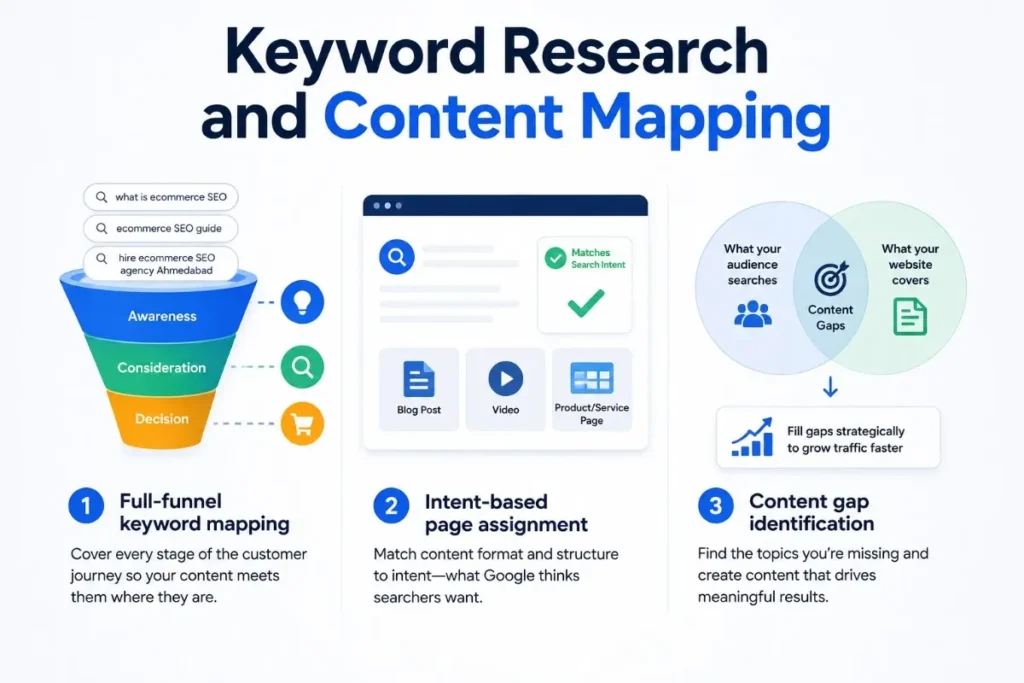
- Full-funnel keyword mapping: The keywords that bring in the most valuable traffic aren’t always the ones with the highest search volume. Someone searching “what is ecommerce SEO” is at a very different stage than someone searching “hire ecommerce SEO agency Ahmedabad.” A proper keyword map covers both ends of that journey and everything in between so your content meets potential customers wherever they are.
- Intent-based page assignment: Every keyword has an intent behind it, and Google has become very good at figuring out what that intent is. If your page doesn’t match what Google thinks a searcher wants, it won’t rank even if every other element is perfectly optimised. Matching content format and structure to intent is one of those things that sounds simple but makes an enormous difference.
- Content gap identification: There are almost always topics your target customers are searching for that your website simply doesn’t cover. Identifying those gaps and filling them strategically tends to deliver faster results than trying to outrank well-established pages on terms your domain isn’t yet strong enough to compete for.
On-Page and Off-Page Optimisation
- Semantic on-page optimization: Targeting one keyword per page is an outdated approach. Google reads pages the way a knowledgeable person would looking for genuine depth and coverage of a topic, not just a keyword repeated at the right density. Optimising for the full semantic cluster of terms around a subject signals real expertise in a way that narrow keyword targeting never does.
- Internal linking structure: The way your pages link to each other tells Google a lot about which content you consider important and how different topics on your site relate to each other. A deliberate internal linking strategy distributes authority where it’s needed most and makes it significantly easier for Google to understand your site’s full topical scope.
- Authority link building: A backlink from a genuinely relevant, respected website carries far more weight than dozens of links from low-quality directories. Building relationships with authoritative sources in your industry takes patience, but the rankings impact is difficult to achieve through any other means and it compounds over time in a way that most other SEO activities don’t.
Local SEO and Google Business Profile
- Google Business Profile management: For local businesses, your Google Business Profile is often the first thing a potential customer sees before they ever visit your website. An incomplete profile, outdated hours, or a lack of recent activity sends the wrong signal both to Google and to the people searching for you. Keeping it current and actively managed is one of the simplest high-impact things a local business can do.
- Citation consistency across directories: If your business name appears slightly differently across JustDial, Sulekha, IndiaMART, and Google, that inconsistency creates confusion in Google’s local ranking systems. It’s a detail that’s easy to overlook and surprisingly impactful when it’s cleaned up properly.
- Location-specific content development: A page that says “we serve customers in Mumbai” isn’t local content. Genuinely location-specific content addresses what customers in that city are actually searching for, references relevant local context, and demonstrates that your business understands that market. For businesses targeting multiple cities across India, this distinction between real local content and templated pages is the difference between ranking locally and not ranking at all.
The Role of Ecommerce SEO in Driving Organic Revenue:
For businesses selling online, organic search is one of the few acquisition channels where the cost per visit doesn’t increase as you scale. Paid ads require ongoing spend to maintain traffic. Organic rankings, once established, continue delivering visitors whether or not you’re actively running campaigns.
The technical complexity of ecommerce SEO is considerably higher than for standard service websites. Large product catalogues create challenges around duplicate content, crawl budget management, and thin page content. Category page structure, faceted navigation handling, and product schema implementation all require specific expertise that generic SEO approaches don’t address.
Our Ecommerce SEO Services are built around these specific challenges. Whether your store runs on Shopify, WooCommerce, Magento, or a custom platform, the strategic framework we apply is grounded in what actually drives organic revenue for online retailers, not just traffic volume.
AI SEO Services The New Competitive Edge:
AI has changed a lot about how SEO is practised, and it’s changed even more about how Google evaluates content. Understanding both sides of that shift is important for any business that wants to stay competitive in search over the next few years.
On the tools side, AI has made keyword research faster, content gap analysis more thorough, and competitive intelligence more accessible than ever. Agencies and in-house teams that use these tools well can move considerably faster than those relying on manual processes alone.
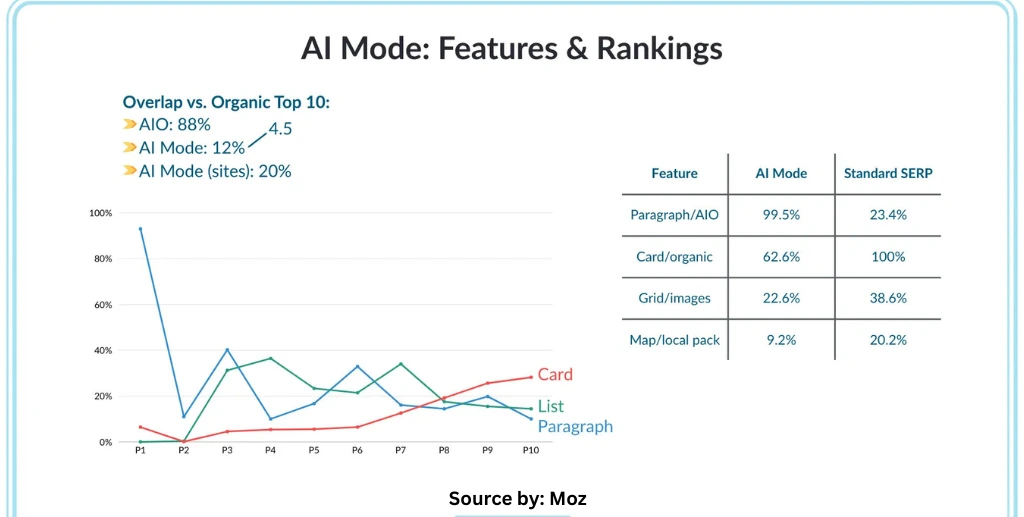
On the quality side, Google’s systems have become remarkably good at distinguishing between content written with genuine knowledge and content produced at volume without real expertise behind it. Content quality and topical relevance remain among the strongest signals in Google’s ranking systems and AI-generated content that lacks depth or authenticity tends to perform poorly in competitive searches. Moz’s breakdown of AI Ranking Shift offers a useful perspective on exactly how these shifts are playing out in real search results right now.
The businesses getting the most from AI SEO services are those using AI to accelerate expert-led strategy not to replace the expertise itself.
Why Your Digital Marketing Strategy Needs SEO at Its Core?
One thing that often gets missed in conversations about SEO is how much it strengthens every other marketing channel you run. When your organic rankings are strong, your paid search campaigns become more efficient because branded search volume reduces cost-per-click. Your content marketing efforts get amplified because the pages you create are being discovered organically rather than relying entirely on social distribution.
The businesses that scale most sustainably tend to be those that treat SEO as infrastructure rather than a campaign. When performance marketing companies and search engine marketing are built on top of a strong organic foundation, the overall return on marketing investment improves across the board.
Building that foundation takes time. But the alternative of staying entirely dependent on paid channels means your customer acquisition costs never meaningfully decrease, no matter how well you optimize your campaigns.
Why Digifinity Is the Right SEO Partner for Your Business?
What makes Digifinity different from a typical Ahmedabad SEO company is that we don’t just hand over a report we stay accountable to the business outcomes that actually matter.
Digifinity works as a full-service design agency with SEO built into everything we do. Our team handles strategy, technical execution, content, and link building under one roof which means faster implementation and no gaps between what’s recommended and what actually gets done.
We work with businesses across Pan India, from local service providers in Ahmedabad to ecommerce brands serving national audiences. The scale differs; the rigour doesn’t.
When technical SEO work requires changes at the development level, our web development team implements those changes directly. That removes the back-and-forth delay that’s common when SEO and development are handled by separate providers and it means recommendations don’t sit in a backlog for months before going live.