Why Marketing Attribution Is Broken Today? (And What Changed?)
Social Media Company in Ahmedabad is moving past the reliability of traditional tracking alone. Businesses used browser tools like Meta Pixel and cookies for performance measurements for years. Now, though, that approach is fundamentally lacking on its own.
Updates to privacy rules, iOS 14+, and limits on cookies and browser tracking left big holes in how we see data. This means many conversions aren’t tracked properly anymore.
Companies are spending more on ads but can’t figure out what really works as well.
Modern performance marketing now uses server-side tracking and advanced attribution systems because of this. Now, to succeed, you need to do more than run ads; accurately measuring post-click actions is crucial too.
It usually begins with checking this broken tracking system. To see what’s wrong, you figure out the lost data, and fix it up by building better tracks, like using Meta Conversions API.
A Performance Marketing Agency creates a full-funnel measurement system. It links ad platforms, CRM systems, and server-side tracking too. This ensures precise performance reporting, you see.
According to McKinsey’s marketing analytics research, companies using advanced attribution systems are way more likely to beat competitors in ROI because of improved decision-making and better visibility into customer journeys.
Conversions API (CAPI) one of the most crucial tools in modern digital marketing.
Don’t just show your brand. Make people feel it.
Our Photography & Videography Services deliver visuals that engage and convert.
Explore Our ServiceWhat is Meta Conversions API (CAPI)? (And Why It Matters So Much?)
Meta Conversions API lets businesses send event data straight from their servers to Meta’s ad platform.
Unlike Meta Pixel, which needs browser cookies and JavaScript, the API works no matter what the browser does. So, it still tracks conversions when cookies are blocked or if users choose to avoid being tracked.
In simple terms:
Pixel = browser-based tracking (limited & vulnerable)
CAPI = server-based tracking (stable & reliable)
A Digital Marketing Agency in India uses this system to ensure clients receive accurate conversion data across devices, browsers, and sessions.
Meta itself strongly recommends Conversions API as a core part of its measurement ecosystem:
Why CAPI is a Big Deal ?
CAPI solves three major problems in modern marketing:
- Data loss due to browser restrictions
- Attribution gaps caused by privacy updates
- Inconsistent tracking across devices
Meta’s Conversion API lets businesses send web and offline event data straight from their servers to Meta’s ad system. Unlike the Meta Pixel, which relies on cookies and gets blocked sometimes, CAPI keeps things reliable and secure. So while the Pixel faces issues with ad blockers and privacy limits, CAPI ensures the data always comes through.
In simple terms, while the Meta Pixel “listens” in the browser, CAPI “reports” directly from your backend systems—such as your website server, CRM, or app database.
A Performance Marketing Agency typically combines Pixel + CAPI to create a hybrid tracking system that maximises data accuracy.
The Real Problem Businesses Face Without CAPI
To know why implementation matters, you first have to see what goes wrong without server-side tracking.
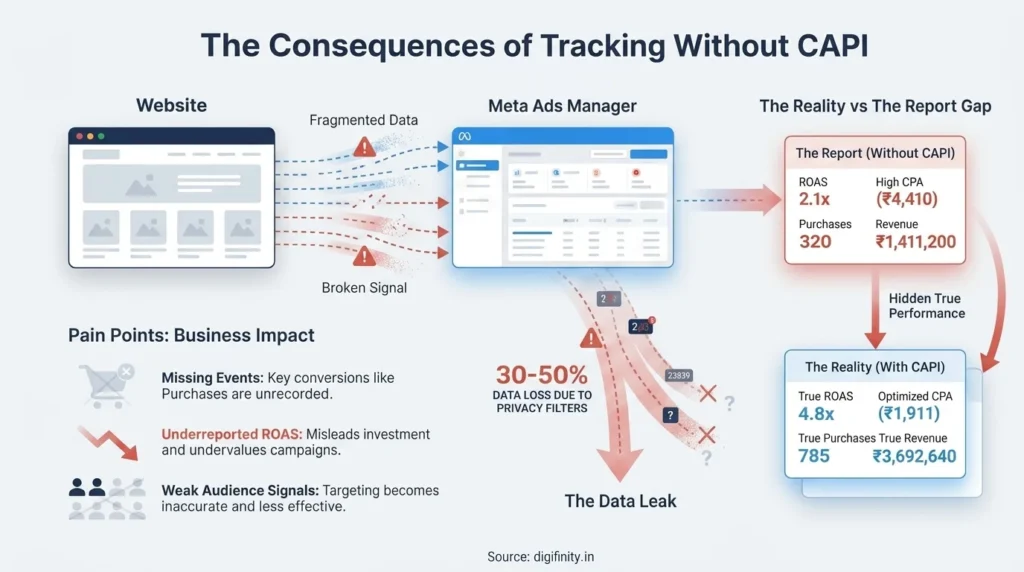
Most businesses think their Meta ad tracking is spot on just because they have the Meta Pixel. However, without Meta Conversions API (CAPI), tons of data gets messed up. It’s lost, incomplete, or wrongly attributed. So there’s a big difference between real performance and what Ads Manager shows.
Without CAPI, decisions go off track. Campaigns might seem unprofitable, pushing companies to misoptimize and trim budgets wrongly. Since Meta gets fewer conversion signals, its algorithm can’t target, retarget, or scale well. So, businesses struggle with incomplete info, making subpar adjustments, trusting false numbers, and growing more slowly.
Most businesses today suffer from:
- Missing conversion events
- Underreported ROAS
- Poor remarketing performance
- Inaccurate campaign optimisation
- Weak audience signals
This is especially common in businesses running large-scale campaigns without proper tracking infrastructure.
A Performance Marketing Companies ecosystem relies heavily on accurate data signals. Without them, even well-optimised campaigns fail to scale properly.
Research from IAB Europe highlights that a significant portion of digital attribution data is lost due to browser restrictions and privacy controls.
This data loss is not minor—it can affect up to 30–50% of tracked conversions in some industries.
This is exactly why Meta CAPI has become a necessity, not a luxury.
Step-by-Step Guide to Set Up Meta CAPI (Detailed Breakdown) :
Setting up the Meta Conversions API isn’t just a tech job; it’s a strategic move that influences marketing performance for a long time, so it’s pretty important.
Below is a simplified but detailed breakdown:
Configure Meta Business Manager Properly :
Setting up Meta Business Manager correctly is the starting point for any reliable Conversions API (CAPI) implementation. If the foundation is not structured properly, even the most advanced tracking setup will struggle to deliver accurate results.
To begin with, the Business Manager should be fully verified so that Meta can clearly recognise the legitimacy of the business. All relevant ad accounts need to be properly linked within the same structure to ensure data flows without fragmentation. Domain verification is equally important, as it establishes clear ownership of your website and ensures conversion events are attributed correctly.
The Meta Pixel needs to be correctly installed too. This lets the site track basic user actions until CAPI kicks in for more detailed server-side data collecting. Once everything is set up cleanly, CAPI functions properly, keeping the reliable tracking going.
Choose the Right Integration Method :
Picking the right integration method for Meta Conversions API (CAPI) is key to its success. What works best relies on your business needs and existing tech setup, so it’s important to choose wisely.
Server-side Google Tag Manager’s flexibility and scalability make it great for businesses. It offers better control over data flows and custom tracking too. Plus, it catches server-side events reliably, so implementation is easier.
Using Shopify or WooCommerce is easier for those on established e-commerce sites because these platforms come with built-in CAPI integrations. This means less technical hassle but still get accurate conversion data, thanks to pre-configured setups.
Direct API integration works best for custom-built sites or advanced systems needing full control over data sent to Meta. It lets you set exact tracking configs and is perfect for firms with special or complex marketing needs, so it offers that precise touch they require.
Choosing the right integration method ensures your CAPI implementation is both accurate and sustainable, laying the foundation for smarter, data-driven advertising decisions.
Official documentation from Google explains Server-Side Tagging architecture in detail.
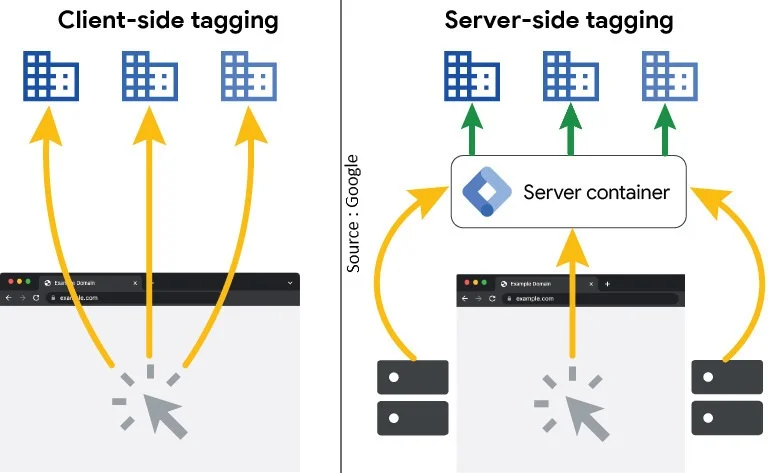
A search engine marketing ahmedabad usually selects the method based on business type, traffic volume, and conversion complexity.
Define and Map Events :
This stage is about spotting and organizing the user actions that mean the most for your business. Figure out which interactions to track, like page views, product views, add-to-carts, lead form submissions, and complete purchases.
Once identified, each event needs to be accurately mapped between the Meta Pixel and the Conversions API. Both systems should have a matching structure for consistency. Getting this wrong can cause duplicates, missing conversions, and unreliable data, making it hard to optimize campaigns.
Deduplication Setup :
Deduplication is essential to ensure that the same user action is not counted twice—once from the browser Pixel and again from the server-side CAPI.
Meta achieves this by using a special event ID that has to match up between data sources. If it works well, Meta can spot and weed out duplicate events. Without it, though, reports get bloated, and decisions made from those numbers could be wrong.
Testing and Validation :
Before going live, the Meta Events Manager needs to be fully tested too. This makes sure everything works right and there aren’t any data issues.
To make sure everything works right, check if events fire properly, the match quality score looks good, and there aren’t any duplicate events. You also need to confirm servers respond correctly. Going through this carefully keeps the setup accurate and ready to expand. Often, a pro Social Media Company in Ahmedabad handles this to make sure all technical stuff is on point before launching a campaign.
How Businesses Actually Benefit From Meta CAPI ?
| Benefit Area | What It Means in Practice |
| Better Attribution Accuracy | Businesses can clearly identify which campaigns, ads, and touchpoints are actually driving conversions, leading to more reliable performance insights. |
| Higher ROAS | With cleaner and more complete data, optimisation decisions become more precise, resulting in improved return on ad spend. |
| Improved Retargeting | Enhanced and more accurate user data helps build higher-quality custom audiences for retargeting campaigns. |
| Reduced Data Loss | Server-side tracking captures conversions even when browser-based tracking is blocked or limited, ensuring fewer gaps in reporting. |
| Smarter Budget Allocation | Marketing budgets are allocated based on real performance data rather than assumptions, making campaigns more efficient and scalable. |
Common Mistakes in Meta CAPI Implementation (Very Important):
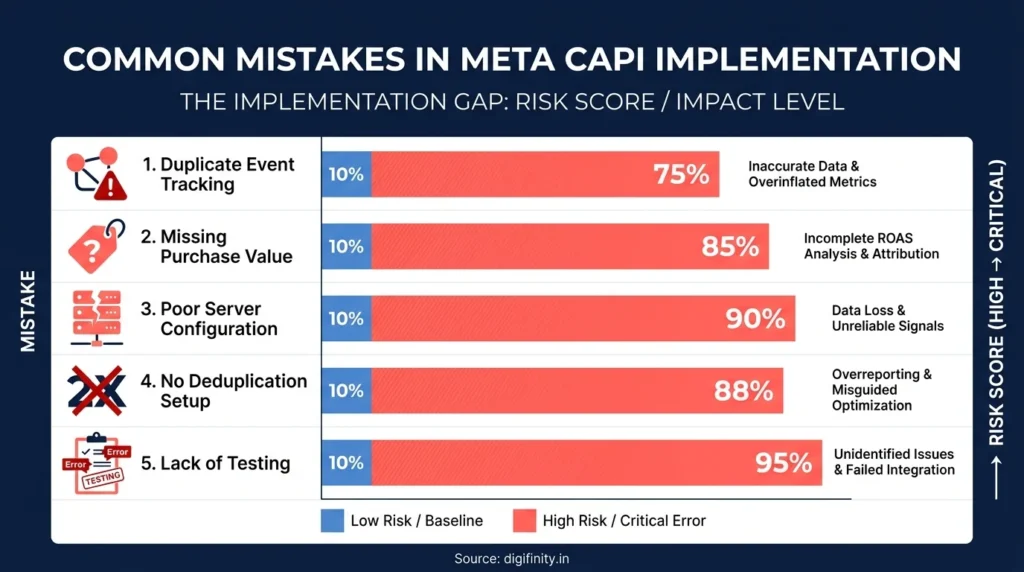
Even though CAPI is powerful, many businesses fail to use it correctly.
Common mistakes include:
- Duplicate event tracking
- Missing purchase value parameters
- Poor server configuration
- No deduplication setup
- Lack of testing before launch
Meta’s official documentation clearly highlights the importance of proper event matching for accurate reporting:
A Digital Marketing Services in Ahmedabad usually follows strict QA processes to avoid these issues.
Advanced Tracking Strategy (What Top Agencies Do Differently)
Top marketers don’t use just one tracking system anymore. Instead, they put together various data pieces for a full customer view. They start with first-party data from their own sites and apps, ensuring precision and compliance with privacy rules. After that, they integrate CRM systems to link marketing efforts with actual customer results.
Server-side tracking with Meta CAPI is super important. It catches those critical conversion events even when browser tracking is blocked. Plus, agencies link device activities, tying mobile, tablet, and desktop actions into one smooth user journey. They don’t stop there; they add offline conversions too like in-store buys and phone calls to form this big data picture. So, businesses can base decisions on solid insights, not just guesses.
Real Business Impact of Meta CAPI
The results speak for themselves. Companies implementing CAPI correctly see their attribution accuracy go up by thirty to forty per cent. Marketers get to know which campaigns actually drive results. They benefit from reduced costs per acquisition and better quality leads. Campaign performance becomes more stable too. Ultimately, conversions increase. Each ad spend becomes smarter, optimizations get easier, and scaling looks like a smart move, not a risky gamble especially when combined with data-driven SEO Services in Ahmedabad that help businesses maximize their overall digital marketing performance.
Future of Digital Attribution (What’s Coming Next)
The marketing world is speeding up. AI-powered models show what actually drives sales, and privacy-focused tracking is now common. Server-side set-ups keep data precise even when browsers get restrictive. We’ve switched from messy spreadsheets to central dashboards for a clearer, more actionable performance overview. Leaders such as Google back these new systems, and early adopters have a big edge over slow followers.
Conclusion : Why Meta CAPI Is No Longer Optional?
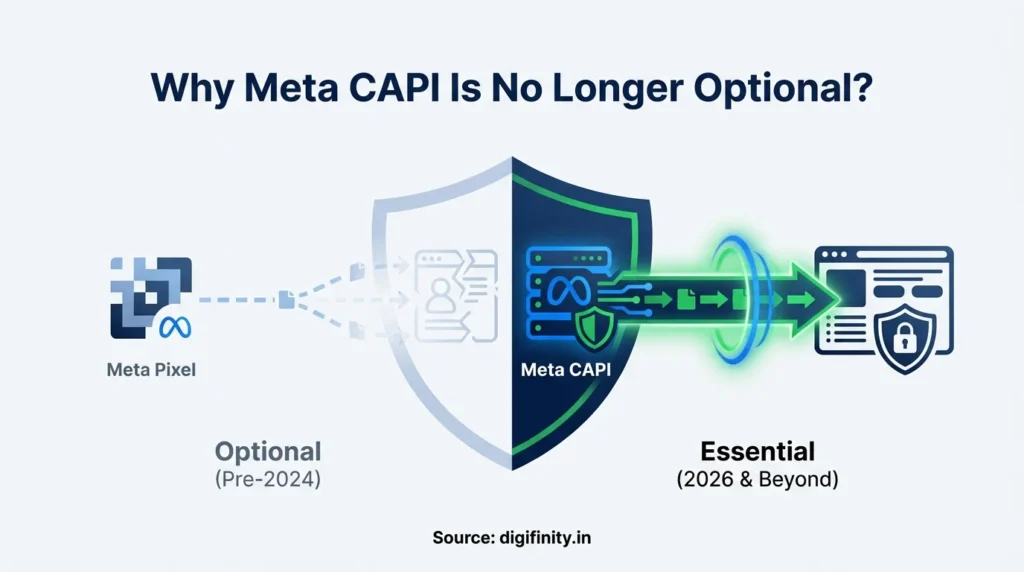
Meta CAPI is crucial in modern digital marketing; it’s way more than a simple tech update. Before, advertisers depended on browser-based tracking, but now, with privacy being a big concern online, those methods aren’t reliable anymore. If businesses don’t use CAPI, they might miss out on key conversion data. This could cause them to mismanage campaign optimizations and waste their ad spending, leading to a poorer ROI.
Proper CAPI implementation makes sure all conversions get recorded, even when users block cookies or platforms limit tracking. This boosts performance data reliability and lets marketers tweak campaigns on the fly, keeping the return on advertising spend consistent. When you pair this tech with the skills of Best Digital Marketing Agency in Ahmedabad you gain a clear edge over the competition. These agencies can make sense of the data and guide strategic moves that help companies grow and scale up over the long haul. Staying ahead in a more privacy-focused digital world? That’s what this approach achieves.