What Google Wants From Your SEO Agency in 2026? 15 E-E-A-T Signals
Okay, real talk — I’ve wasted time on SEO tactics that looked good in theory but did absolutely nothing on a real website. And after working with clients across industries as an SEO agency in Ahmedabad, I can tell you — the rules have changed.This isn’t another recycled “complete guide.” This is stuff we’ve actually tested, watched work, and sometimes watched fail. If you’re spending time on SEO in 2026 and not seeing results, there’s a good chance E-E-A-T is the missing piece.
First, Why Does E-E-A-T Even Matter?
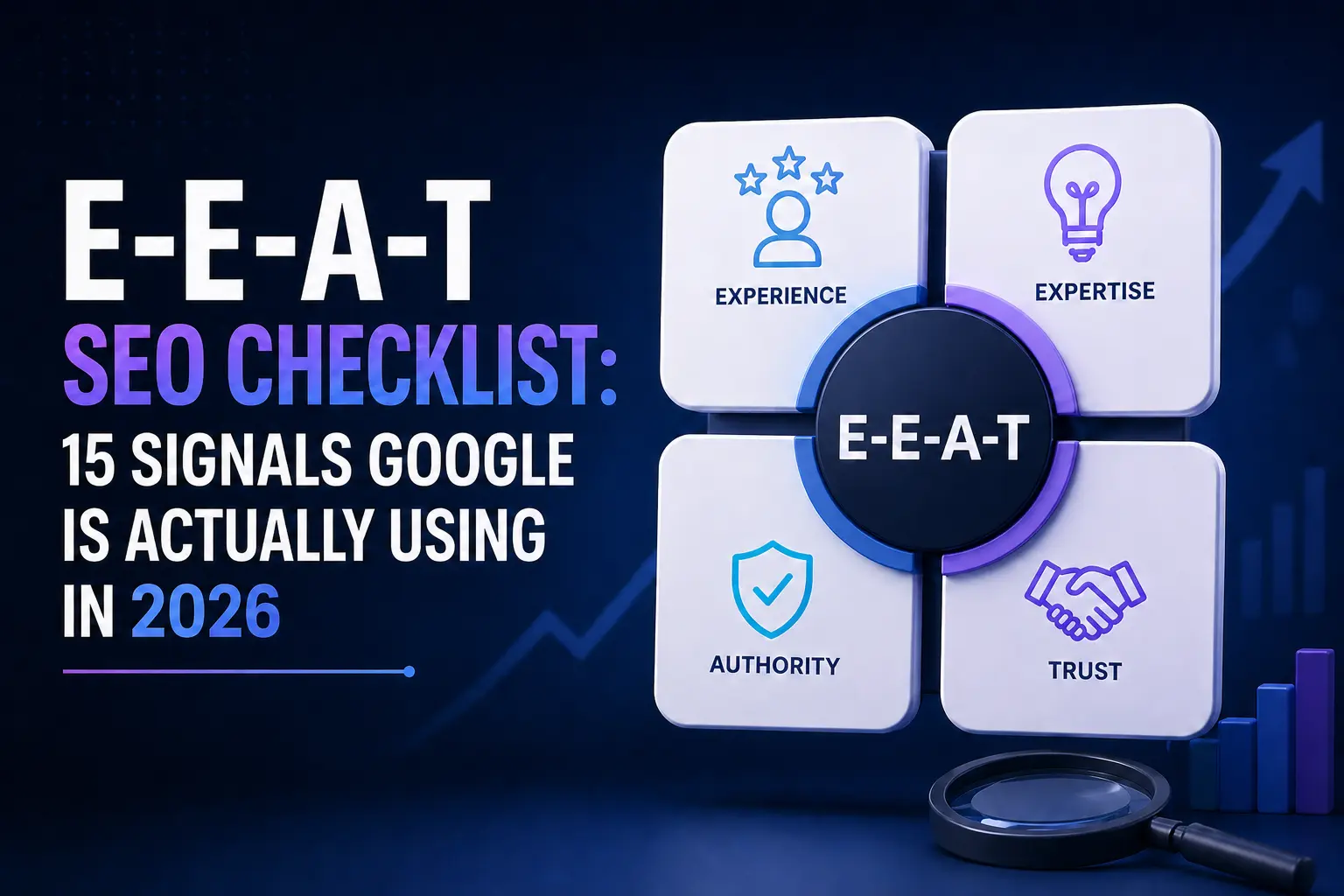
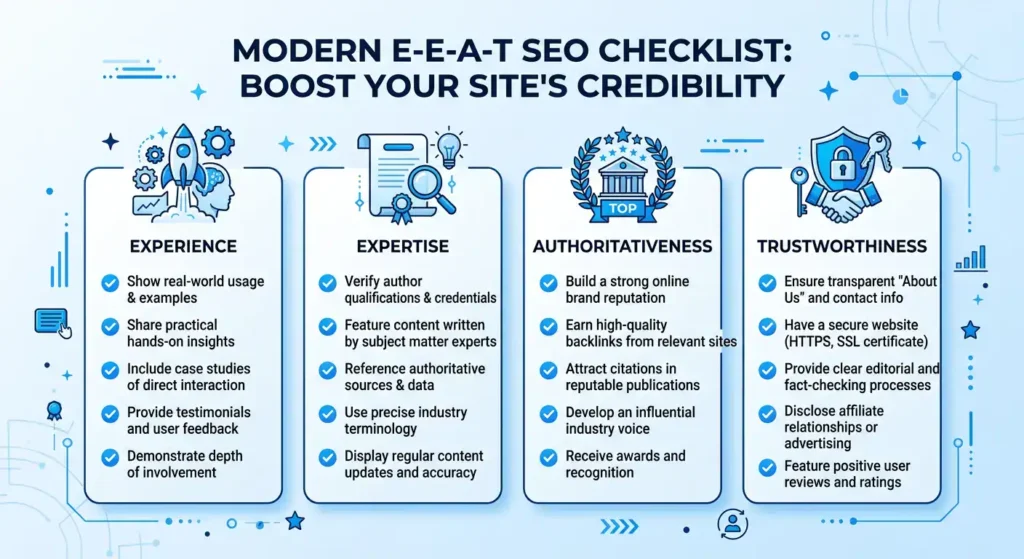
Here’s how I think about it.Google isn’t trying to rank websites, it’s trying to answer questions. And before it shows your page to someone, it’s basically asking itself: “Can we actually trust this?”E-E-A-T is a Experience, Expertise, Authority, Trust, is how Google tries to answer that. These are the four things its quality raters are trained to look for. And honestly? With the amount of AI-written, copy-paste garbage flooding search results right now, Google has had to get a lot better at telling real human knowledge apart from content that just sounds knowledgeable. According to Google’s own search quality guidelines, this kind of evaluation has never been stricter.Good news, though, if you’re writing from actual experience and genuinely trying to help people, you’re already doing better than most.
How to Start Improving Your Website SEO Today.
Digifinity works with businesses across India to build authority, trust, and rankings that last. Explore Our Services
The 15 E-E-A-T Signals Every SEO Agency Should Know in 2026:
1. You’ve Actually Done the Thing You’re Writing About
Nobody can fake this one convincingly for long. Real experience leaks into your writing in ways you don’t even plan the client situation that went sideways, the result that surprised you, the thing you tried that everyone said would work but didn’t.Compare “keyword research is important” to “we found a cluster of low-competition keywords that tripled a client’s traffic in four months by targeting questions nobody else was answering.” One of those is useful. The other is noise. Google is getting better every year at knowing the difference.
2. Specific Examples Beat General Advice Every Single Time
People aren’t reading your blog for entertainment. They want to know if what you’re saying will actually help them. The quickest way to prove it will? Show, don’t just tell.Real numbers, before and after scenarios, actual content plans you used are worth ten times more than a paragraph of general advice. If you improved a page’s rankings, walk through what you changed and why. That specificity is what makes content genuinely useful instead of just readable.
3. Cover the Whole Topic — Not Just the Easy 70%
Here’s a pattern I keep seeing: most blogs on any given topic cover the same comfortable ground and call it a day. The well-known stuff. The safe stuff. The stuff that’s already on fifty other pages.The parts that are harder to write are the edge cases, the “it depends” situations, the context that changes the answer, that’s where you actually separate yourself. When someone reads your page and doesn’t need to go back to Google for more, that’s a strong signal. Ahrefs’ research backs this up content that fully satisfies search intent holds rankings far better than content that partially answers the question.
4. Write the Way You’d Actually Talk to Someone
A lot of companies think sounding formal makes them sound smart. It doesn’t. It makes them sound like they’re trying too hard.Short sentences? Totally fine. Contractions? Of course. Starting a sentence with “But” or “And”? Yes, please. Writing that sounds like a real person wrote it gets read. Writing that sounds like it went through three rounds of corporate approval gets skimmed and abandoned.
5. Make It Easy to Scan
Here’s a reality check most people won’t read your blog post word for word. They’ll scan the headings, slow down on what catches their eye, and maybe read that part properly. Your job is to make that experience work.Short paragraphs. Clear subheadings. Key points that can stand on their own. This isn’t just about making your blog look nice it directly affects whether people stay long enough to actually absorb what you’ve written.
6. Internal Links That Make Sense to the Reader
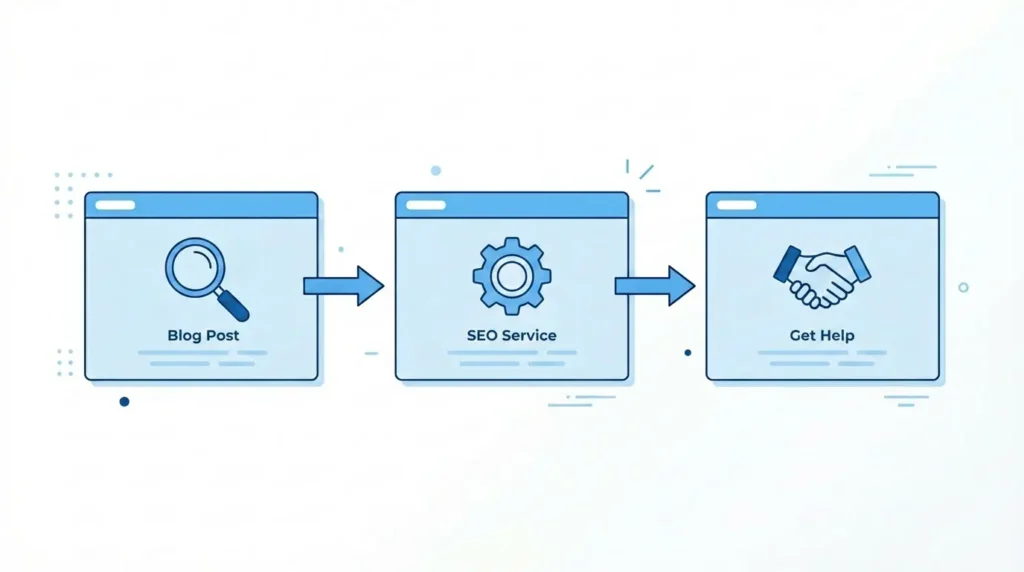
Internal linking isn’t just a technical thing to do because someone told you to. Done right, it’s how you guide someone deeper into your site in a way that feels natural.If someone’s reading about SEO strategy, pointing them toward SEO services in Ahmedabadat the right moment isn’t pushy, it’s helpful. It answers the obvious next question: “okay, but what does this look like in practice?” Links that make that kind of logical sense get clicked. Links that feel random get ignored. Read More : Design websites that attract, engage, and convert potential clients
7. Don’t Pretend Paid and Organic Live in Different Worlds
Most businesses running SEO are also running paid campaigns at the same time. Treating them as two completely unrelated things in your content makes you look like you’ve never actually managed a real marketing budget.Talking about how search engine marketing in Ahmedabad fits alongside organic efforts isn’t just more accurate it also signals to Google that your content understands the full picture, which helps build topical authority over time.
8. Link to Sources You’d Actually Recommend to a Friend
A lot of SEOs are weirdly scared of outbound links. They think it’ll send traffic away and never come back. In reality, linking to solid sources like Google Search Central shows that your content is grounded in something real, not just spun from thin air. You don’t need loads of them. Two or three genuinely useful references is enough.
9. Consistency Beats Bursts: Every SEO Agency Knows This
One great post every three months isn’t going to build authority. What works is showing up consistently. Not because volume automatically means rankings it doesn’t but because a steady stream of useful content tells Google (and your readers) that there’s an actively maintained, genuinely knowledgeable site behind the domain.Two or three solid posts a month, maintained over time, will outperform a ten-post content blitz followed by months of silence. Every time.
10. Get Your Name Mentioned – Even Without a Link
Every forum mention, every review, every time someone drops your business name in an industry conversation — Google picks that up. Even when there’s no backlink attached. These unlinked brand mentions feed into how search engines understand your reputation. You can’t manufacture this. It comes from doing work people actually talk about.
11. Quality Backlinks Over Quantity – Full Stop
Honestly, if you’re still chasing link volume in 2026, you’re behind. One link from a site people actually read and respect does more than fifty directory links nobody ever visits. Backlinko’s research has confirmed this pattern over and over.Earn links by producing content worth citing. Write something original. Get quoted. Publish data that other people in your industry want to reference.
12. Go Back and Update What You’ve Already Published
Most businesses are so focused on new content that they completely neglect what’s already sitting on their site. But old posts with outdated stats, broken links, or advice that no longer applies are quietly dragging your rankings down.Refreshing existing content – better structure, updated data, new sections where things have changed – often produces faster results than a brand new post. It’s one of the most overlooked moves in SEO.
13. Be Clear About Who You Are and What You Actually Do
Landing on a page and having no idea who wrote it or what company is behind it that’s an instant trust problem. Author info, clear contact details, honest service descriptions. These things matter.If you’re writing about marketing, being transparent about what a performance marketing agency in Ahmedabad actually does day-to-day gives your content real-world grounding that readers and Google both respond to.
14. Your Site Needs to Actually Work on a Phone
This gets left out of E-E-A-T conversations way too often. But a site that’s slow, jumpy, or nearly unusable on mobile is telling every visitor that you haven’t thought much about their experience and Google’s Core Web Vitals framework measures exactly that. Load speed, layout stability, responsiveness. Not abstract concepts direct measures of whether your site is frustrating or smooth to use.
15. Get Your Facts Right – Every Single Time
One wrong statistic. One outdated claim presented as current. One oversimplification that leads someone astray. Any of these can break trust immediately and once a reader catches you in an error, they’re not coming back.If you’re not 100% sure about a number, say so. Or leave it out. Being honest about the limits of what you know is actually a trust signal, not a weakness.
The Honest Reality of Building E-E-A-T as an SEO Agency:
Nobody wants to hear this, but there’s no quick fix here. E-E-A-T isn’t a setting you turn on or a checklist you run through once. It builds up slowly through consistent, honest, useful work over months.Write what you genuinely know. Be specific. Answer the full question. Keep things updated. Connect pages in ways that help actual people, not just crawlers.Six months of doing that properly will show you results that don’t disappear at the next algorithm update.
What Real SEO Looks Like in 2026 ?
The teams doing well right now aren’t obsessing over meta tag tweaks. They’re building content systems thinking about how topics connect, how pages support each other, and how the whole site gradually becomes the most complete and useful resource in its niche.They’re also putting serious effort into improving what already exists. Because Google doesn’t care how much you publish. It cares how useful, accurate, and trustworthy your content actually is.If you’re evaluating an SEO partner, ask them one question: what do you do with the content we already have? If the answer is mostly “we create new stuff,” that’s a red flag.
Mistakes That Keep Slowing People Down:
Publishing content just to hit a number without asking if it’s actually helping anyone. Treating pages as standalone pieces instead of thinking about how they fit together. Forcing keywords into sentences where they don’t belong. Going after competitive terms before you’ve built the authority to rank for them.None of these will kill your SEO. But they’ll keep you stuck longer than you need to be.
So Where Does This Leave You?
E-E-A-T is Google’s way of asking the same question your readers are already asking: why should I trust this page?Answer that question honestly with real experience, clear writing, accurate information, and content that’s kept current and you’ve done most of the work. The rest is just showing up consistently.That’s the direction search is heading in 2026. Less gaming, more genuine usefulness.
From guesswork to rankings, we make SEO work the way it should.
Get a free consultation with Digifinity's SEO team.
SEO improvements based on E-E-A-T can show early results in 2–3 months, while building strong authority may take 6–12 months depending on competition and consistency.
Update old content, add author info, fix internal links, and clean up your About page. If you want someone to handle the technical side, our Website Design & Development team can sort the foundation out properly.
A well-structured web app development service improves user experience, performance, and trust signals, which contribute to stronger E-E-A-T.
A reliable eCommerce SEO service ensures secure transactions, user trust, and high-quality content—all essential for building E-E-A-T signals.
AI isn't penalized directly but generic, surface-level content doesn't build trust. Real experience and specific insight is what Google rewards. Need content that reflects your brand properly? Check our Branding & Designing solutions.
SEO agencies can improve E-E-A-T by creating expert-level content, optimizing technical SEO, building trust signals, and maintaining content accuracy and consistency.