
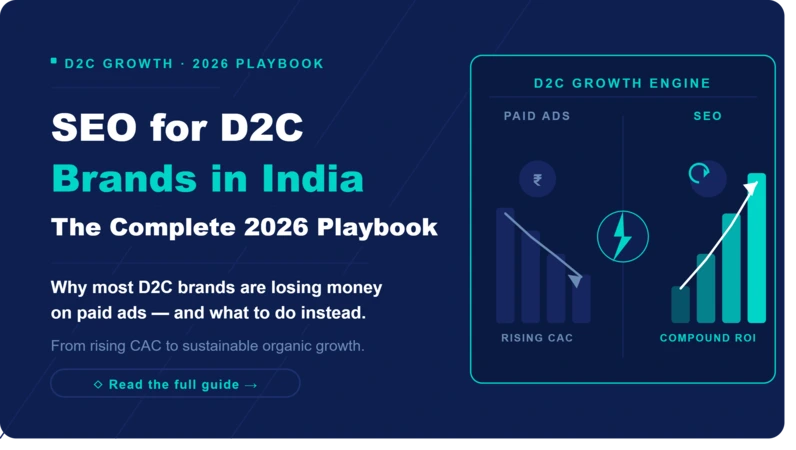
Why Most D2C Brands Are Losing Money on Paid Ads And What to Do Instead?
As an Ahmedabad SEO company working with D2C brands across India, we see this pattern repeat constantly. Let me be direct: if your D2C brand’s growth plan is basically “spend more on Meta and Google,” you’re building on sand. Every rupee you stop spending, the traffic stops. That’s not a growth strategy that’s a subscription to someone else’s platform. This is why many brands eventually turn to a digital marketing agency that can help build sustainable acquisition channels alongside paid advertising.
I’ve seen this play out with dozens of brands. Ad costs creep up quarter after quarter. ROAS starts looking shakier. And founders keep pouring the budget in because they don’t have a real alternative yet. The alternative is organic visibility, and in 2026, it’s more achievable than most brands realise.
India’s D2C market crossed ₹6,96,400 crore (US$ 80 billion) in 2024, according to IBEF’s retail sector report. That growth sounds exciting until you realise everyone else sees the same number and is chasing the same customers. The brands that come out ahead won’t be the ones with the biggest ad budgets; they’ll be the ones that built compounding organic traffic while their competitors were busy paying rent to Meta.
That’s where partnering with an experienced digital marketing agency becomes a real strategic move, not just another marketing line item. Here’s what that actually looks like in practice.
D2C SEO Isn’t Like Other SEO And Most Advice Misses This:
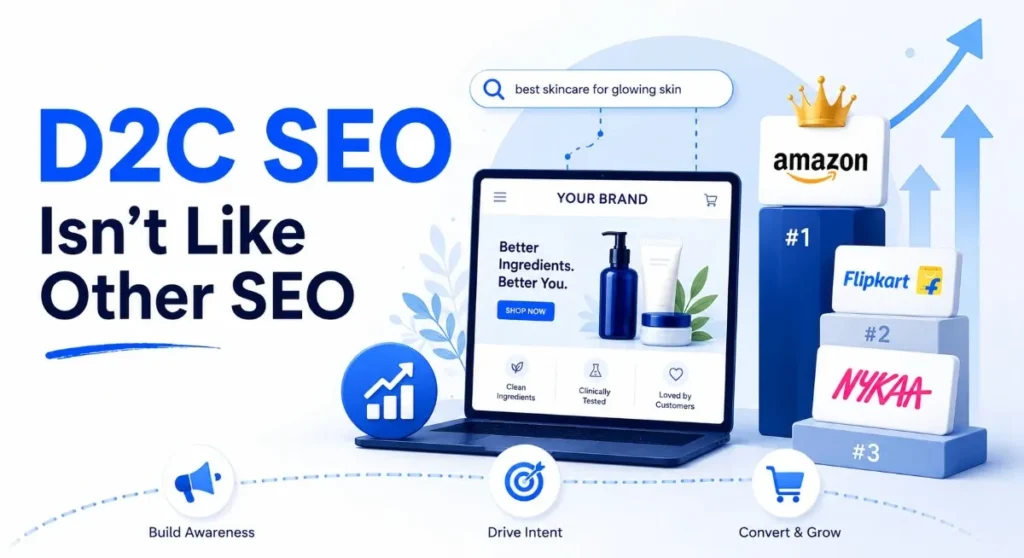
Most SEO content online is written for B2B SaaS companies or marketplace sellers. Neither maps cleanly onto what D2C brands actually need.
Your situation is genuinely harder. Amazon, Nykaa, and Flipkart are sitting on massive domain authority and will outrank your product pages on almost every transactional keyword by default. Your potential customers often don’t know your brand exists yet. And you need SEO to work at both ends building awareness with people who’ve never heard of you, while converting people who are ready to buy right now.
There are three real layers to the D2C SEO challenge:
- Marketplace authority: Amazon’s product listings rank above brand websites for most transactional keywords, regardless of how good your page is
- Zero brand recall: you’re entirely dependent on category and intent-based discovery because nobody’s searching your brand name yet
- Double duty content: your SEO needs to build top-of-funnel awareness while also closing bottom-of-funnel conversions from the same website
That’s a real challenge. But it’s also why most of your competitors are approaching it wrong which means there’s genuine room to move.
Not Sure Where to Start SEO, Paid Ads, or Both?
Digifinity helps D2C brands across Ahmedabad and India find the right mix organic, paid, or both. No guesswork, just a plan built for your goals.
Explore Our ServiceThe 2026 D2C SEO Framework: What Actually Works?
1. Start with the buying journey, not search volume:
The keyword “protein powder” has an enormous search volume. It’s also nearly impossible to rank for and filled with people who aren’t close to buying. “Best protein powder under ₹1500 for beginners” has a fraction of the volume but the person searching is ready to make a decision.
A solid ecommerce SEO strategy maps your keyword universe to three stages: awareness (“how to choose a face serum”), consideration (“niacinamide vs retinol for oily skin”), and conversion (“buy niacinamide serum India”). Blog posts live at the top, comparison and ingredient pages sit in the middle, and your product and category pages do the closing at the bottom.
2. Your product pages are underworked:
Most D2C product pages are an afterthought generic descriptions lifted from the manufacturer, title tags that say “Face Serum | Brand Name,” no structured data, no indexed reviews. A properly built product page looks very different:
- Keyword-rich title tag that reads like a search result someone would actually click
- Meta description written like ad copy, not a filing label
- Unique product descriptions that speak to the customer’s actual concern
- Product and Review schema markup so Google understands what the page is about
- Real customer reviews being indexed as fresh content over time
Category pages deserve even more attention. A well-optimised category page targeting something like “organic skincare for sensitive skin” often outperforms individual product pages and it captures shoppers who are still deciding, not just hunting for a specific SKU.
3. Own more than one spot on the search results page
Page one isn’t the finish line, it’s the starting point. Most brands celebrate when they crack the top 10 and move on. But the brands that are actually winning organic search aren’t just ranking once per query, they’re showing up three or four times on the same page.
Think about what that looks like from a shopper’s perspective. They search “best face serum for oily skin in India” and they see your brand in the featured snippet at the top, your product in the image pack, your FAQ page in the People Also Ask box, and your category page in the organic results below. That’s not luck, that’s structured content and proper schema doing exactly what it’s supposed to do.
The trust signal that creates is something paid ads genuinely can’t buy. A sponsored label tells people you paid to be there. Showing up four times organically tells them Google keeps choosing you.
4. Build topical authority, not just individual pages
Here’s something most D2C brands get wrong about SEO: they treat it like a page-by-page project. Optimise the homepage, optimise the product pages, write a few blogs, done. That approach gets you some traffic but it has a ceiling.
Google isn’t just evaluating individual pages anymore. It’s looking at your entire website and asking does this brand genuinely know what it’s talking about? A nutrition brand that only has product pages reads very differently to Google than one that also covers ingredient breakdowns, dosage guides, comparison content, usage FAQs, and buying guides. The second brand gets treated as an authority. That authority then lifts everything from product pages, category pages, blog posts across the whole site.
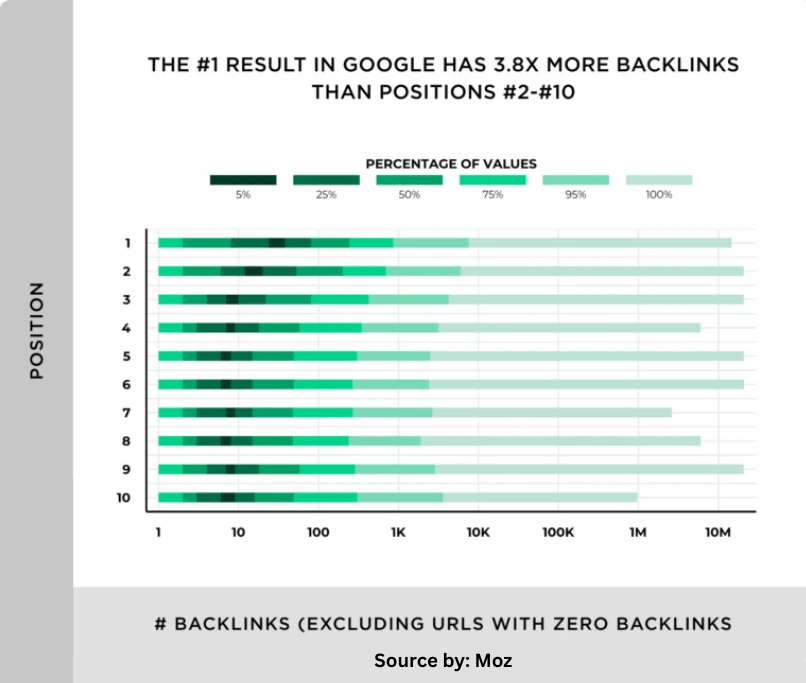
The compounding effect here is real. Backlinko’s SEO study found that long-form content between 3,000–10,000 words earns 77% more backlinks than shorter posts. More backlinks mean more authority. More authority means broader rankings. It builds on itself but only if you start early enough to let it.
Your competitors who began building topical depth in 2024 are already ahead. The right time to start was then. The second best time is now.
5. Technical SEO for mobile-first India:
Over 82% of ecommerce browsing in India happens on mobile. Google ranks based on your mobile experience, not desktop. If your pages load slowly on a 4G connection, you’re losing both rankings and customers at the same time.
The technical foundations that matter most for D2C brands:
- Core Web Vitals LCP under 2.5 seconds, CLS under 0.1 are the baseline Google uses to evaluate page experience
- Clean URL structures and canonical tags to prevent duplicate content across product variants
- XML sitemap and robots.txt hygiene
- Faceted navigation handling to prevent index bloat on large product catalogues
- HTTPS sitewide, no exceptions
Paid Ads vs. SEO: What the Numbers Actually Look Like?
Founders often ask whether SEO is worth it when paid ads deliver faster results. The honest answer depends on your time horizon. Here’s how the two channels compare across the metrics that matter:
| Factor | Paid Ads (Meta/Google) | Organic SEO |
| Time to first results | Days to weeks | 3–6 months |
| Traffic when you stop spending | Drops to zero immediately | Continues and compounds |
| Cost per click over time | Increases as competition rises | Decreases as authority builds |
| Brand trust signal | Low (users know it’s an ad) | High (organic = earned credibility) |
| Long-term ROI | Diminishing without scale | Compounding with consistency |
| Suited for | Quick validation, product launches | Sustainable growth engine |
The smart play in 2026 isn’t choosing one over the other, it’s using paid to capture demand now while SEO builds the infrastructure you’ll own permanently.
Regional SEO: The Tier 2 and Tier 3 Opportunity Most Brands Ignore
One of the biggest untapped opportunities for Indian D2C brands right now is Tier 2 and Tier 3 city demand. Cities like Surat, Jaipur, Indore, Lucknow, and Coimbatore have fast-growing, ecommerce-ready populations with strong purchase intent and far less competitive pressure than metros.
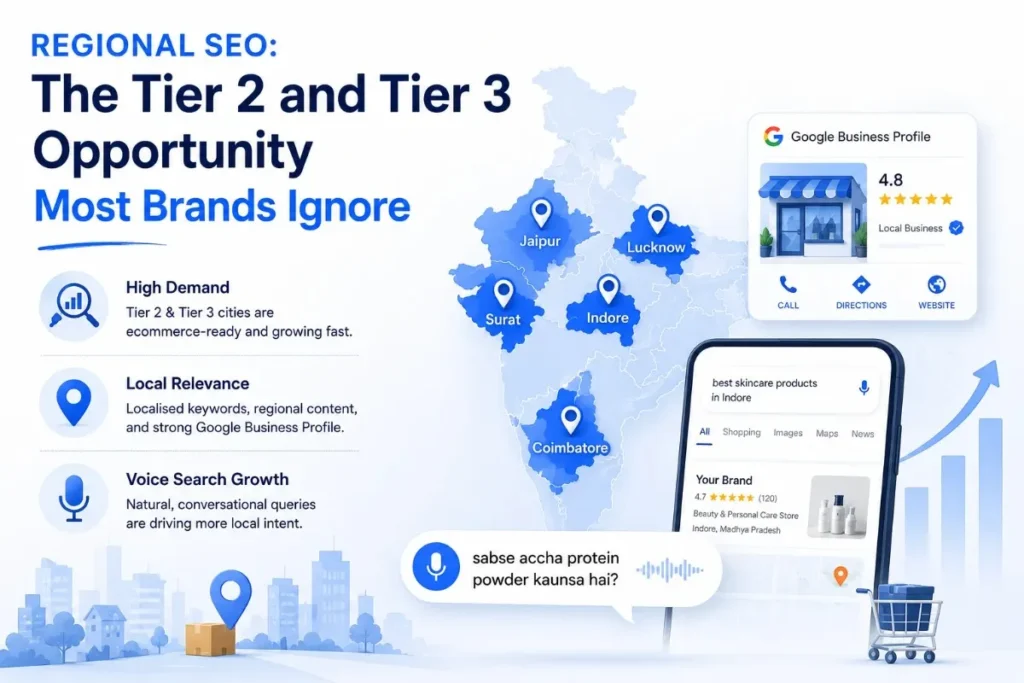
Reaching these audiences properly means localised keyword research, Hindi and regional language content where relevant, and a Google Business Profile that signals local relevance. We’ve run localised SEO campaigns for brands targeting both Gujarat-specific audiences and pan-India markets and the difference in organic conversion rates when regional intent is properly addressed is measurable, not marginal.
Voice search is accelerating this even further. Queries like “sabse accha protein powder kaunsa hai” or “Ahmedabad mein online kurta” are growing fast. Structuring FAQ content and conversational blog posts around natural spoken queries is a practical tactic today, not something to revisit later.
AI Overviews and SGE: What Changes for D2C Brands in 2026?
Google’s Search Generative Experience is now showing AI-generated answer summaries above traditional results for many commercial queries. These summaries pull from pages with strong E-E-A-T signals Experience, Expertise, Authoritativeness, and Trustworthiness.
To appear in AI Overviews, your content needs to meet what Google’s E-E-A-T guidelines define as genuinely helpful clearly structured answers, author credibility signals, factual accuracy with citations, and schema markup that helps Google parse your page properly. This isn’t optional for competitive D2C categories anymore, it’s the baseline.
Brands treating AI Overviews as a threat are missing the point. If your content is comprehensive and credible, Google’s AI surfaces it. That’s meaningful traffic with zero additional ad spend.
When Should You Actually Bring in an Agency?
Honestly, most founders try to handle SEO in-house first. That makes sense you know your product, your customer, and your category better than anyone outside will. But SEO in 2026 isn’t just writing blog posts and adding keywords. You’re dealing with technical audits, content strategy, link acquisition, Core Web Vitals, schema markup, and constant algorithm shifts all at the same time.
The point where in-house breaks down is usually around month three or four. The work is happening but rankings aren’t moving, and nobody on the team has the bandwidth to figure out why. That’s not a people problem, it’s a depth problem. SEO rewards specialists, not generalists stretched thin across five other priorities.
A good agency doesn’t just hand you a report every month. They’ve already solved the exact problems your brand is facing in your category, at your stage and they execute across technical, content, and link-building work together rather than one thing at a time.
Beyond SEO, the D2C brands that grow fastest are usually the ones that don’t treat channels in isolation. Pairing organic search with a consistent social media marketing strategy keeps your brand in front of warm audiences between purchase decisions. And if you need faster traction while SEO builds momentum, a well-targeted performance marketing campaign fills that gap without burning budget on cold audiences who were never going to convert anyway.
The real difference comes down to this: paid traffic is a tap. Turn off the spend, the traffic stops that same day. Organic traffic is more like a dam it takes longer to build but once it’s there, it holds and keeps building. The brands we see winning in 2026 are the ones who started treating SEO as infrastructure two years ago, not a campaign they run when ad costs spike.
Why D2C Brands Work With Digifinity?
Digifinity is an Ahmedabad-based digital marketing agency with a focused practice in D2C and ecommerce SEO across India. Our approach combines technical precision with content strategy to build topical authority that ranks and converts not just one or the other.
- Category-specific SEO audits for D2C verticals not templated reports
- Intent-led keyword architecture mapped to your actual buying journey
- Product and category page optimisation that improves both rankings and conversion rate
- Regional and multilingual SEO for Tier 2/3 market penetration
- AI Overview and featured snippet optimisation for 2026 SERP formats
- Transparent monthly reporting tied to business outcomes, not vanity metrics