
What is GEO? The Complete 2026 Guide for Every India SEO Agency Client
Search has changed. Ranking on page one used to feel like the goal. Now it is just the entry point and even that does not guarantee you get seen. If you are working with an India SEO agency or shopping around for one, you have probably started hearing the term GEO short for Generative Engine Optimisation. It sounds like another industry buzzword. It is not. The way people find things online has genuinely shifted, and the brands that have not noticed yet are already losing ground.
Here is the part that catches most people off guard. The brand showing up in an AI-generated summary is not necessarily the one sitting at the top of Google. Sometimes it is not even ranking on page one. That disconnect is what GEO is really about.
Google’s AI Overviews, Perplexity, ChatGPT these tools have changed the shape of a search result. Instead of a list of links, the user gets an answer. Written out, sourced from across the web, delivered before a single click happens. A lot of people read that answer and stop. No scroll. No click. No visit to your site. If your brand did not make it into that answer, you were invisible for that query full stop.
This guide gets into what GEO actually is, how it differs from SEO and AEO, and why waiting on it is a decision Indian brands will regret.
What Exactly is Generative Engine Optimisation (GEO)?
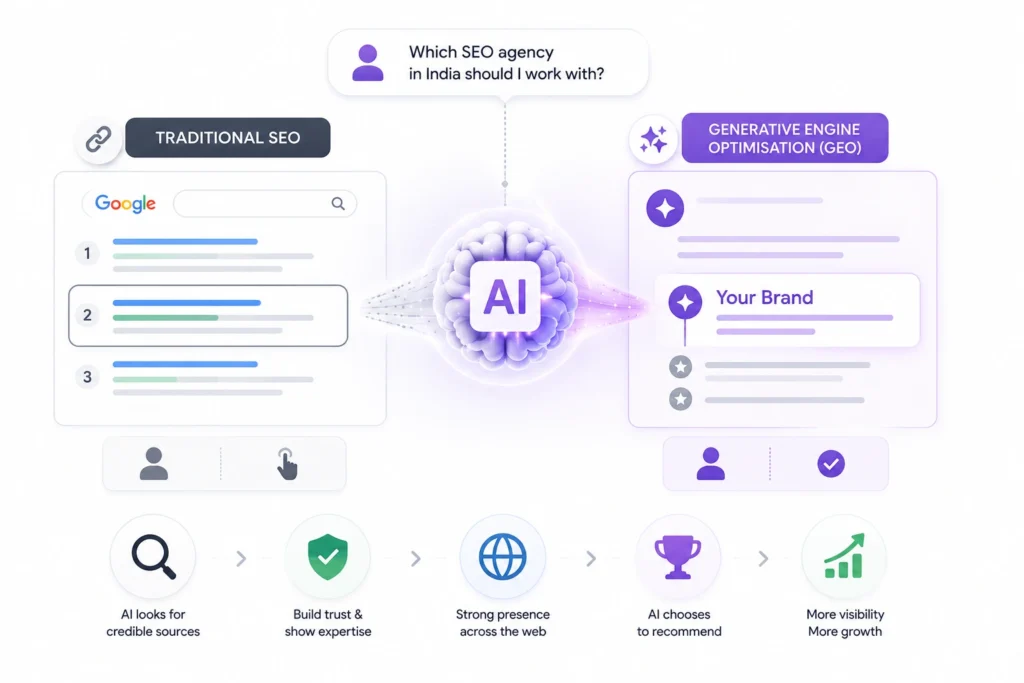
Put simply, GEO is about making sure AI systems know your brand well enough to reference it. When an LLM generates an answer, it is pulling from sources it considers credible, clear, and authoritative. GEO is the work you do to become one of those sources.
Traditional SEO puts a link on a results page. GEO puts your brand inside the answer itself before the user even sees the links. And given how many people never scroll past the AI summary, that difference in placement is a difference in whether you get found at all.
Here is a simple way to think about it. Someone asks Gemini “which SEO agency in India should I work with?” The AI does not guess. It goes with the brands that have shown consistently the ones with clear, credible, well-structured presence across the web. If that is not you, it does not matter where you sit on a traditional Google results page. You are not in the conversation.
Is Your Brand Invisible to AI Search in 2026?
Digifinity helps Indian brands build the content depth, entity authority, and technical structure needed to get cited by AI systems like Google AI Overviews, Perplexity, and ChatGPT. Stop being invisible where it matters most.
Explore Our ServiceGEO vs SEO vs AEO: How These Three Actually Differ?
GEO, SEO, AEO three terms that get thrown around like they mean the same thing. They do not. Each one is solving a different problem, and confusing them leads to strategies that end up doing none of them particularly well.
| Criteria | SEO | AEO | GEO |
| Primary Goal | Rank on Google | Get featured in answer boxes | Appear in AI-generated results |
| Output Format | Blue links on SERPs | Snippets, People Also Ask | AI summaries, LLM citations |
| Key Signal | Backlinks + on-page | Structured data, concise answers | Brand authority + semantic depth |
| Measurement | Rankings, traffic | Snippet visibility | Brand mentions in AI outputs |
The short version: SEO builds your organic visibility. AEO helps you win structured answer placements like featured snippets. GEO positions your brand to be cited by AI systems as a credible, trustworthy source. In 2026, a serious approach to search engine positioning SEO accounts for all three not just one
Why GEO Matters Especially for Indian Brands Right Now?
Nine hundred million internet users and a growing chunk of them are now starting their search journey by asking an AI instead of typing into Google. That shift is happening across the board, not just in metro cities. Tier-2, tier-3 AI tool adoption has spread faster than most brands have had time to react to. The way Indian consumers find products, compare services, and make decisions looks different today than it did eighteen months ago. Most marketing teams have not caught up with that yet.
For e-commerce brands, local service providers, SaaS platforms, and D2C labels all segments seeing rapid growth in India GEO is not a future consideration. It is a present-tense competitive advantage. The brands investing in it now are building citation authority that will compound over the next two to three years. Those who wait are going to find themselves in a difficult position when catch-up becomes genuinely expensive.
The Core Pillars of a GEO Strategy:
GEO is not a single tactic. It is a collection of strategic inputs that, together, make your brand the kind of source AI systems want to reference. Here is how it breaks down practically:
1. Content depth and semantic authority
Good content does not just answer the question sitting in front of it it answers the ones the reader has not typed yet. AI models have gotten quite good at spotting the difference between a page that genuinely knows its subject and one that is just covering the basics to tick a box.
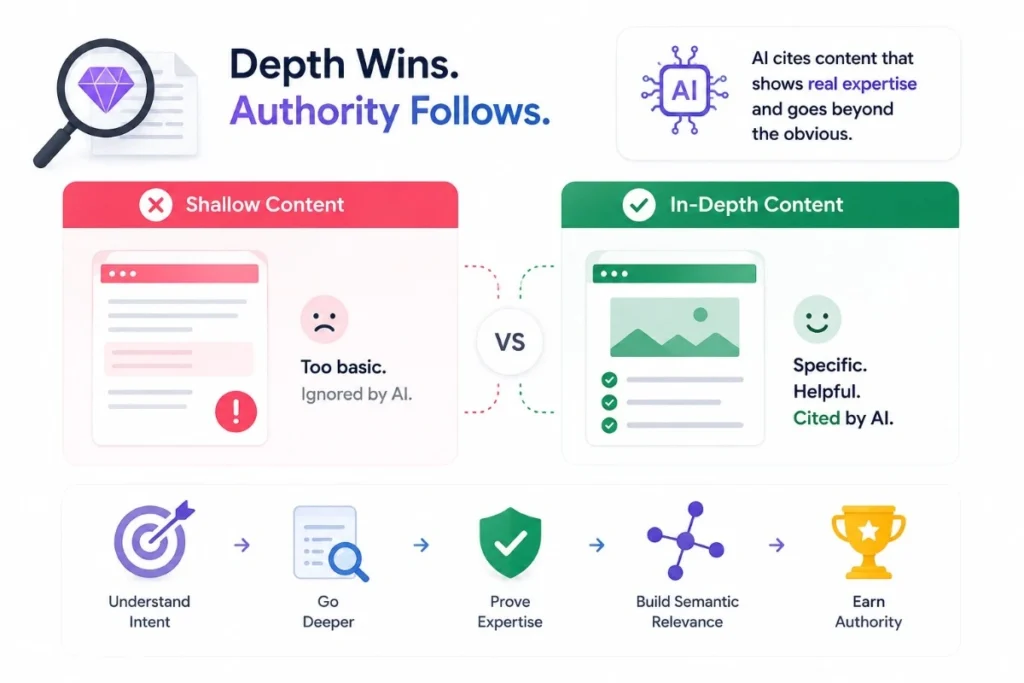
Take e-commerce SEO Services in India as an example. A page that just says “optimize your product titles and build backlinks” is not useful to anyone and AI systems know it. What actually gets picked up is content that goes deeper: why certain product categories rank differently, how the pace of incoming reviews affects search visibility, where schema behaves differently on Shopify versus a custom-built store, and how purchase intent changes as a buyer moves through the funnel. Generic advice gets ignored. Specific, experience-backed content gets cited.
2. Brand mention signals and entity recognition
AI does not just read your website it reads everything written about you. A mention on a news site, a review on an industry platform, a directory listing, even a podcast episode that names your brand all of it feeds into how well an AI model understands who you are and whether you are worth referencing.
Think of it less like a ranking signal and more like a reputation. The broader and more consistent that reputation looks across the open web, the more confidently an AI system treats your brand as a real, credible entity. Entity SEO was already important before GEO came along. GEO just makes ignoring it a much more expensive mistake.
3. Structured data and semantic clarity
A page that reads well for humans does not always parse well for machines. GEO-friendly content needs both. Clean heading structure, schema markup done properly, key facts written in clear direct sentences rather than buried inside long paragraphs these are not nice-to-haves. They are what determines whether an AI can actually extract and verify information from your page quickly and confidently. If it cannot, it moves on to a source it can read more easily.
This is also where technical SEO services and SEM stops being something you hand off and forget about. Site architecture, crawlability, markup quality these are not backend housekeeping tasks anymore. They directly determine whether an AI system can read your content cleanly and trust what it finds. Get that wrong and even your best content goes unnoticed.
4. Trustworthiness signals (EEAT in practice)
EEAT did not start with GEO Google has been using it as a quality signal for years. But AI search has made it sharper. When an LLM is deciding which sources to pull from, it is not just looking at what you say. It is looking at whether you look like someone worth listening to. No author name? Skipped. No real examples or proof points? Skipped. Claims that conflict with what a dozen other credible sources say? Definitely skipped.
The brands that keep showing up in AI-generated answers have one thing in common their content actually feels like it came from someone who knows what they are talking about. Named authors, real examples, sources you can verify. Not a boilerplate credibility line buried in the footer. The kind of content where you can tell, within the first paragraph, that a real person with real experience wrote it.
How GEO Works Alongside Your Existing India SEO Agency Investment?
A common concern from marketing teams and agency clients is that GEO means starting over. It does not. Your existing SEO investment, the backlink profile you have built, the content library you have developed, the technical site structure you have cleaned up all of it contributes to GEO authority. The difference is in the additional strategic layer you place on top.
GEO asks you to think beyond keyword rankings and consider:
- Topic completeness over keyword density. Does your content actually resolve the question including the follow-ups a reader would naturally have or does it just hit the target phrase a few times and move on? AI systems are not counting keywords. They are looking for content that closes the loop on a query completely.
- Brand entity strength across the open web. When someone outside your company writes about your brand on a review site, a news outlet, an industry directory that reference carries weight. AI systems use that kind of third-party presence to decide whether a brand is credible enough to cite. One good website is not enough on its own.
- Source credibility architecture. Does your content cite real sources? Does it show who wrote it and why they are qualified to write it? These are not optional extras; they are the structural signals that tell an AI system your content is worth trusting. Bolting them on later rarely works as well as building them in from the start.
If you are already investing in performance marketing or paid search alongside your organic efforts, GEO also strengthens the brand signals those campaigns generate because every touchpoint where your brand appears authoritatively online contributes to the cumulative entity profile AI systems assess.
What GEO Services Actually Look Like in Practice?
When an agency offers GEO services, what does that actually mean for your business month to month? At a functional level, a solid GEO engagement typically covers:
- AI SERP monitoring and citation tracking: Most brands have no idea how they appear in AI-generated answers or whether they appear at all. Start checking. Run your target queries through Google AI Overviews, Perplexity, ChatGPT, and Gemini. See what comes up. See who gets cited and who gets ignored. You cannot fix what you have not looked at.
- Content restructuring for semantic depth: The issue for most brands is not that they lack content, it is that the content they have was written for a completely different version of search. Going back through it, finding the thin spots, the gaps, the sections an AI would struggle to extract anything useful from, and actually fixing those that is the work. Not just publishing more pages on top of what is already broken.
- Entity and authority building: Getting your brand mentioned in the right places, genuine press coverage, credible industry sources, real third-party citations is not a PR exercise. It is how AI systems learn that your brand is a legitimate, trustworthy entity worth referencing. That kind of outreach has to be intentional and ongoing.
- Schema and structured data implementation: If an AI system has to work hard to figure out what your page is about, it will just move on to one that makes it easier. Clean structured data removes that friction. It tells the system exactly what it is looking at and that clarity pays off in how reliably your content gets used.
For brands that have invested in custom software or platform development, GEO also intersects with how product pages, knowledge bases, and documentation are structured making it relevant well beyond the marketing blog.
GEO for Local and E-commerce Brands in India?
Local search and e-commerce SEO in India are two areas where GEO is already creating visible competitive separation. Local consumer behaviour research consistently shows that trust and authority signals drive more discovery decisions than pure proximity and AI systems are trained on exactly those signals.
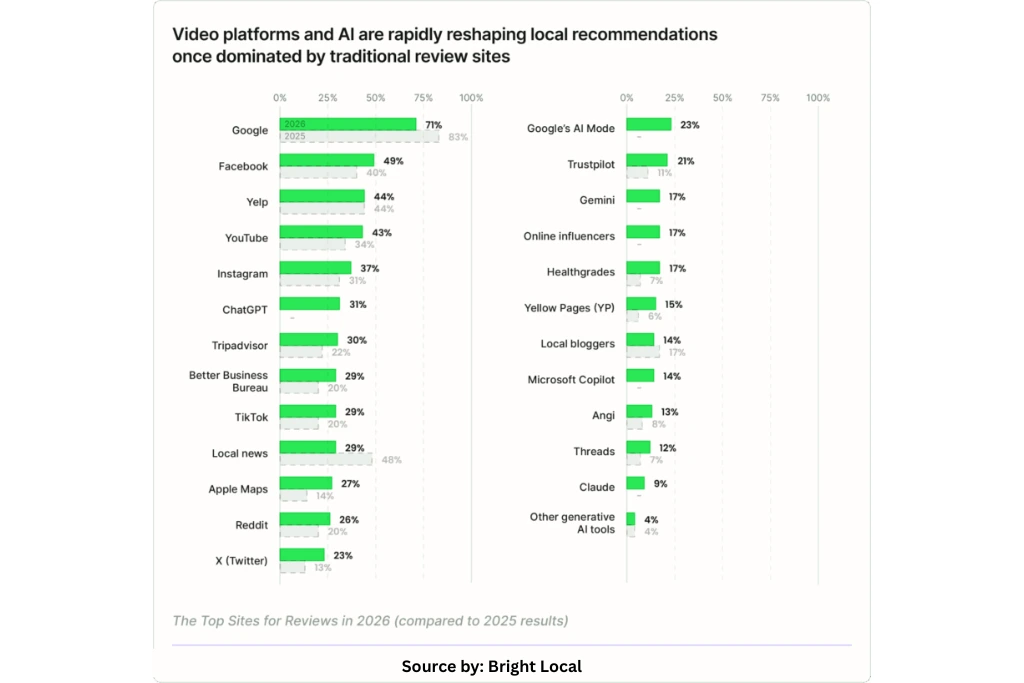
For a business working with a local SEO company, the AI summary for “best [service type] in [city]” is increasingly the first thing a potential customer sees. If your brand is not part of that summary, you are losing discovery at the very top of the funnel before a user has even seen your website or GMB listing.
For e-commerce brands, GEO kicks in before a user has even decided what to buy. Someone asks an AI “which brand of [product] should I go with for [use case]” and the AI does not check your Google ranking. It pulls from whatever it has seen written about you: reviews, comparison articles, editorial mentions, how consistently your brand shows up as a credible option across different sources. If that body of evidence is thin, your brand does not make the cut. Building it deliberately through good content, a steady flow of genuine reviews, and real third-party coverage is what a GEO strategy actually looks like for e-commerce.
Measuring GEO Performance: What to Actually Track?
GEO is harder to measure than SEO, that is just the honest answer. There is no “GEO rankings” report you can pull on a Monday morning. AI-generated summaries do not show up in Google Analytics. So you work with proxies, and you track them consistently over time.
Brand query volume growth: Are more people searching for your brand by name? That is often a sign they came across you somewhere: an AI summary, a cited source, a generated recommendation and it stuck. They did not click through at the time but they remembered. Not the most direct metric but one of the more honest ones.
Direct traffic increase: Someone sees your brand in an AI response, closes it, and types your URL straight into the browser. That shows up as direct traffic. If that number is climbing steadily while your organic holds or grows, that is a decent sign your GEO efforts are starting to land.
Third-party mention velocity: How fast is your brand picking up mentions across credible external sources? This one does not pay off immediately. But it is the thing that feeds citation authority over time. Check it monthly. You are not looking for a big number, you are looking for a direction.
If you are running a strong design agency presence alongside your SEO, those brand consistency signals feed directly into how AI systems perceive your brand’s authority and legitimacy. The two strategies reinforce each other more than most teams realise.
AI SEO Services vs GEO Services Is There a Difference?
You will hear both terms in agency conversations this year. “AI SEO services” typically refers to using AI tools, large language models, automated auditing platforms, predictive analytics to improve traditional SEO outputs: faster content production, smarter keyword clustering, better gap analysis. It is a workflow and efficiency story.
GEO services, on the other hand, are about the outcome rather than the tool. The goal is not to use AI better in your SEO process, it is to get your brand cited by AI systems in search responses. The distinction matters when you are briefing an agency or reviewing a proposal. Ask explicitly: is this about using AI tools for SEO, or is this about optimising for AI-generated search results? You need both, but they are not the same thing.
Building for Mobile-First AI Discovery:
India runs on mobile. That is just the reality. Most people searching through Google, asking voice assistants, or using AI chat tools are doing it from their phones. So if your GEO strategy is not built around that, you are already behind.
The way AI summaries appear on a small screen is different from a desktop. Voice queries are phrased differently too, more conversational, more direct. Brands that have a well-developed mobile app pick up extra signals here that purely web-based brands miss app store authority, in-app content, and deep linking all quietly feed into how AI systems size up your brand.
And here is the part most teams overlook: a slow or broken mobile experience is not just a UX problem. AI systems favour sources that are stable and easy to access. If your site loads poorly on mobile, it is actively working against your chances of being cited no matter how good the content is.
Why This is the Right Time to Start?
The brands that establish GEO authority in 2025–26 are going to hold a compounding advantage as AI-generated search becomes the default experience for the majority of Indian internet users. This is not speculative; the infrastructure is already in place. Google AI Overviews are live. Perplexity is growing fast in urban India. ChatGPT and Gemini are embedded in workflows across industries.
The cost of early GEO investment is far lower than the cost of entering a mature, competitive landscape two years from now when every serious brand has already built its citation authority. The strategic window is real and it is narrowing.