Zero-Click Lead Generation by Digital Marketing Company Ahmedabad
Why This Shift Matters More Than It Seems?
For years, digital marketing followed a fairly predictable path.
Bring traffic in.
Guide users to a landing page.
Convert a percentage of them.
Simple enough—and for a long time, effective.
But if you’ve been running campaigns recently, you’ve probably noticed something. Traffic isn’t the problem anymore. In many cases, it’s easier than ever to get clicks.
What’s harder is getting people to actually complete the journey.
A growing number of users drop off somewhere between curiosity and action. And it’s not always because your offer is weak.
Often, it’s because the process feels longer than it needs to be.
A Digital Marketing Company in Ahmedabad today looks at this differently. Instead of asking how to drive more traffic, the better question is—how do we reduce the number of steps between interest and action?
That’s where zero-click marketing starts to make sense.
This shift is strongly supported by evolving user behavior patterns highlighted in Statista Digital Insights where attention spans and multi-platform usage trends are continuously tracked.
Make your brand stand out and convert faster with compelling photo & video content.
Good SEO isn’t built overnight. It starts with the right strategy.
Content that speaks before users even think
Explore Our ServicesUnderstanding Zero-Click Marketing Without the Noise
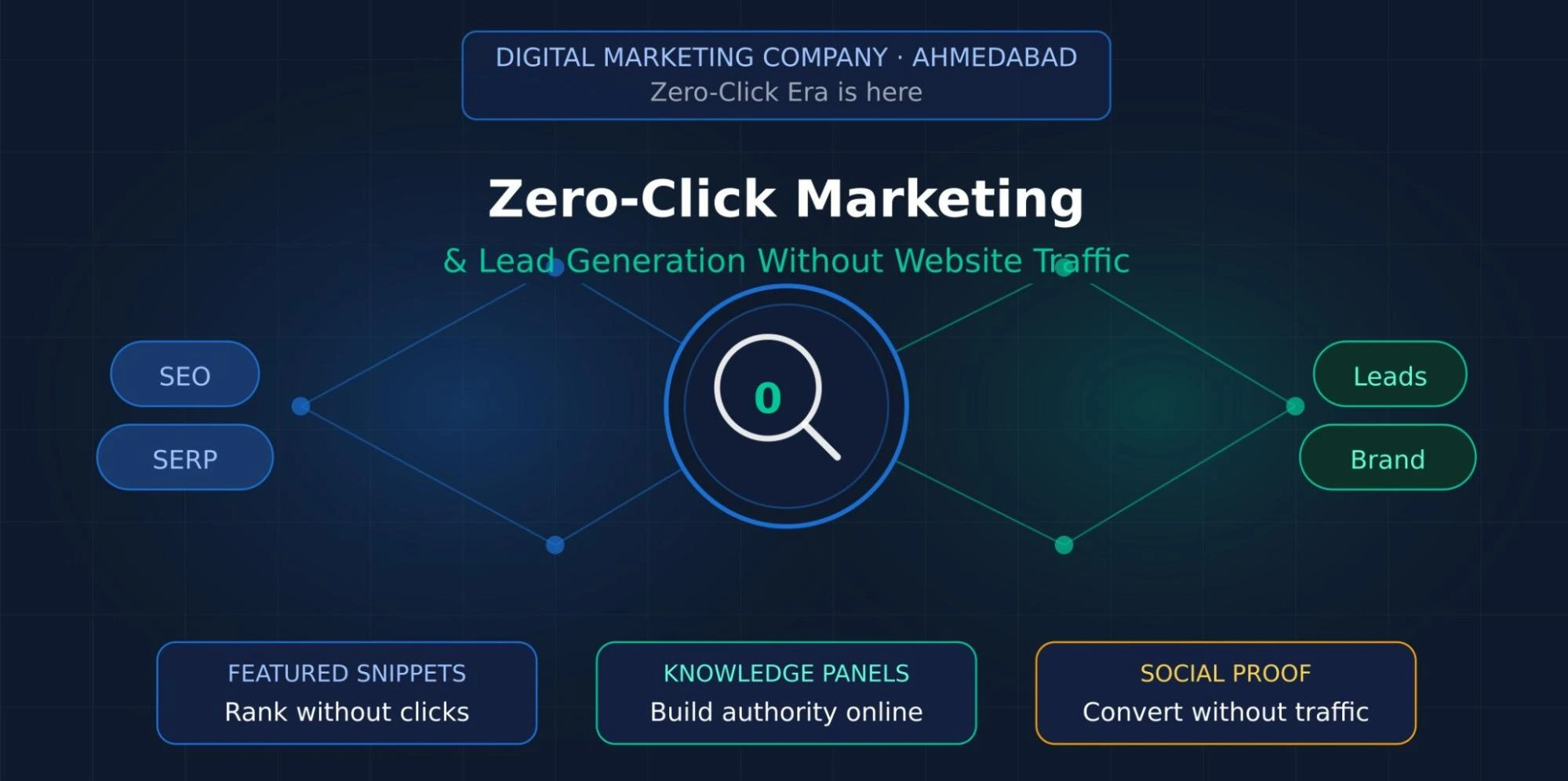
At its core, zero-click marketing is not complicated.
It simply means allowing users to take action without making them visit your website first.
That’s it.
Instead of redirecting users through multiple steps, the interaction happens directly on the platform they’re already using. It could be a search result, a social media feed, or even a chat window.
The idea is not to remove structure—but to remove unnecessary movement.
You’re not forcing the user to go somewhere else. You’re meeting them exactly where they are.
What Actually Changed Over Time
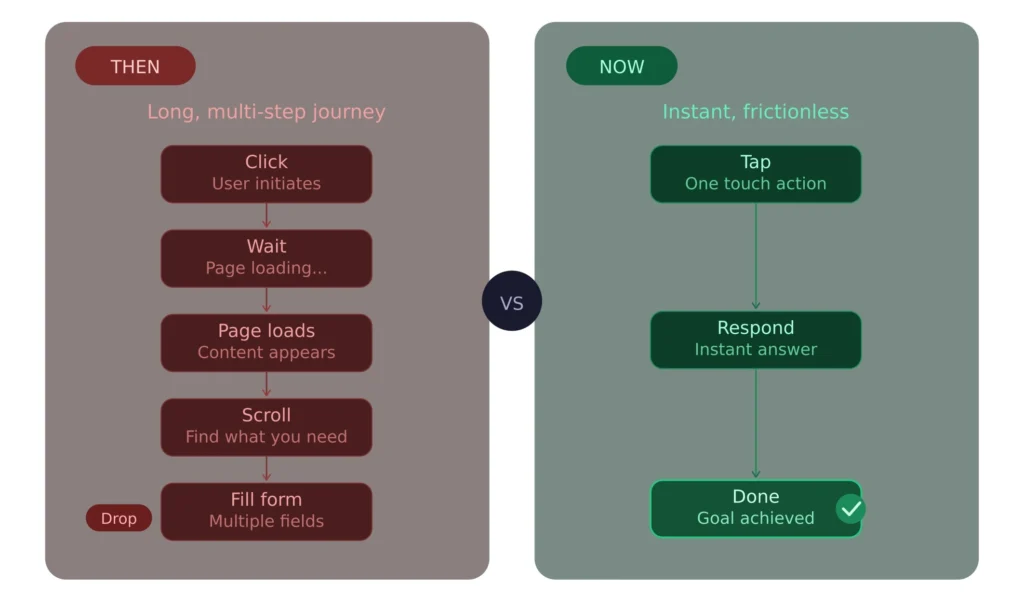
Most people assume tools changed first. In reality, behaviour changed faster.
Users today:
- Move quickly between apps
- Expect near-instant responses
- Avoid anything that feels slow or repetitive
- Rarely complete long, multi-step actions
This shift is subtle, but it explains a lot.
Think about how a typical journey used to look:
Click → wait → page loads → scroll → fill form → submit
Now compare it to what users naturally prefer:
Tap → respond → done
That difference is small in theory, but massive in practice..
If the process feels complicated, they simply won’t engage.
Why Traditional Funnels Feel Heavier Today?
The traditional funnel isn’t broken. It just hasn’t evolved at the same pace as user expectations.
A Best Social Media Marketing Company in Ahmedabad focuses on reducing this friction. Instead of forcing users to leave the platform, it captures their intent where they already are.
Earlier, users were more patient. They didn’t mind exploring options or navigating through multiple steps.
Today, that patience is limited.
If something feels even slightly inconvenient, users don’t try harder—they just leave.
This is why many businesses see decent traffic but lower conversion rates. The issue isn’t visibility. It’s friction.
Reducing that friction is what modern marketing is really about.
That one shift often improves conversion rates without increasing ad spend.
How Platforms Quietly Pushed This Change
If you look closely, every major platform is moving in the same direction.
- Google shows answers directly in search results
- Instagram keeps adding in-app interaction features
- WhatsApp is now used for direct business communication
- Platforms prioritise keeping users inside their ecosystem
This isn’t accidental.
Every major platform is moving toward reducing user effort.
Search engines and apps are increasingly designed around instant outcomes. Even product discovery systems are now optimized for micro-interactions.
This ecosystem approach is well explained in McKinsey Digital Reports especially in how digital journeys are becoming non-linear.
Why Zero-Click Works So Well? (Simple Psychology)
There’s nothing complicated here.
This idea is also strongly supported by modern UX and behavior research from Nielsen Norman Group.
People choose the easier option.
If something requires fewer steps, it feels faster. If it feels faster, it feels better. And when it feels better, people are more likely to complete it.
Zero-click marketing works because it aligns with this behaviour.
Instead of pushing users forward, it removes resistance.
And once resistance drops, conversion rates usually improve—even without increasing traffic.
How This Looks in Real Campaigns
This approach is already being used across platforms.
On Google, instead of sending users to a landing page, campaigns can capture leads directly using extensions or forms. This is where a Google Ads Agency plays a critical role.
The idea is consistent—reduce the distance between intent and action.
Understands this focuses less on “driving clicks” and more on “capturing intent quickly.”
That shift alone changes how campaigns perform.
The Rise of Messaging-Based Conversions
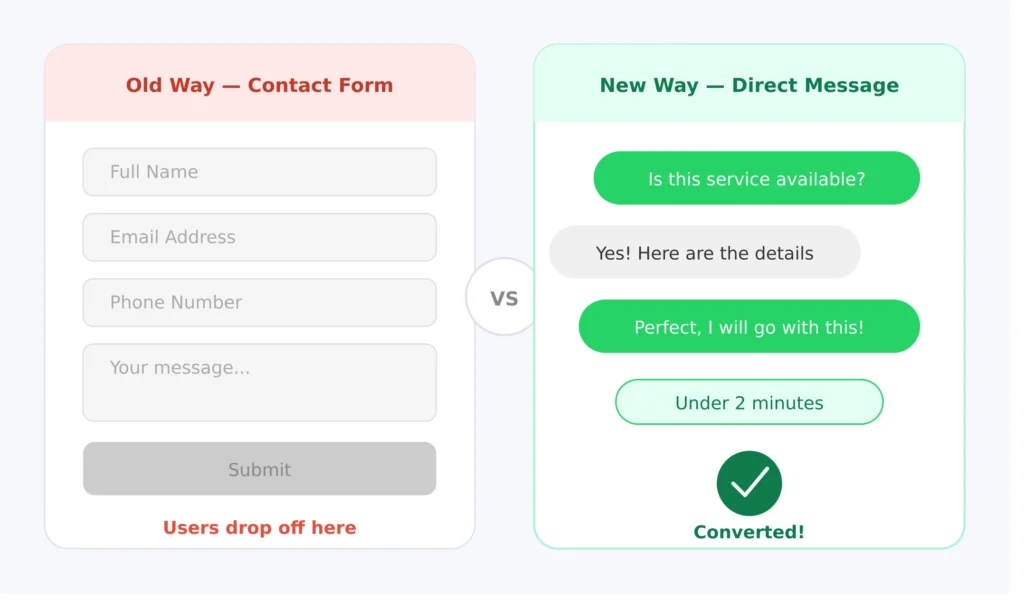
One noticeable trend is how users prefer interacting today.
Instead of filling out forms, many would rather send a message.
It feels easier. More natural.
Platforms like WhatsApp and Instagram have made this behaviour almost instinctive. Users can ask questions, get quick responses, and decide without overthinking.
This approach often improves lead quality as well. People who engage in conversation tend to be more serious.
But there’s one condition—speed matters.
If responses are delayed, the opportunity disappears just as quickly as it came.
Where Lead Generation Is Heading
If you step back and look at the bigger picture, the direction is quite clear.
- Journeys are getting shorter
- Expectations are increasing
- Platforms are becoming more integrated
Businesses that adapt to this shift tend to see better efficiency. Those that don’t often increase budgets without seeing proportional results.
Zero-click marketing isn’t replacing everything. But it’s becoming a core part of how modern lead generation works.
Understanding Platform Roles: A Smarter Approach by a Digital Marketing Company in Ahmedabad
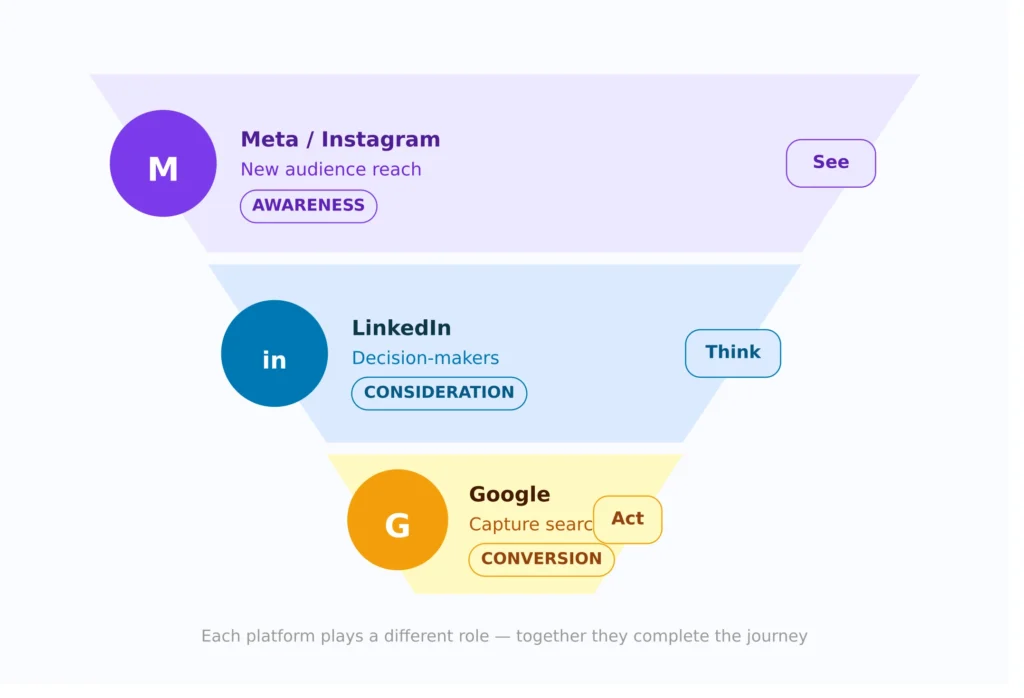
A common mistake is trying to find the “best” platform.
That approach rarely works.
Each platform serves a different purpose:
- Google captures users who are already searching
- Meta introduces your brand to new audiences
- LinkedIn connects you with specific decision-makers
Google captures users who are already searching, where a Google Ads Agency plays a key role in converting intent into measurable results.
That’s what makes campaigns more predictable.
Why Budget Allocation Needs a Rethink?
Splitting budgets equally across platforms sounds logical, but it often leads to inefficiency.
Different platforms serve different roles. So, budget allocation should reflect that.
- Google should focus on conversions
- Meta should drive reach and awareness
- LinkedIn should target high-value audiences
This doesn’t mean one platform is better than the other. It means each one needs to be used for what it’s designed to do.
A strategy becomes stronger when budget follows intent, not symmetry.
How Platforms Work Together in Reality?
Real user journeys are rarely linear.
Someone might see your brand on Instagram first. Later, they search for it on Google. That’s when they convert.
At the same time, LinkedIn might reinforce your credibility in the background.
This layered exposure creates familiarity.
And familiarity builds trust.
When platforms are used together, they don’t compete—they support each other.
Retargeting: The Quiet Driver of Conversions
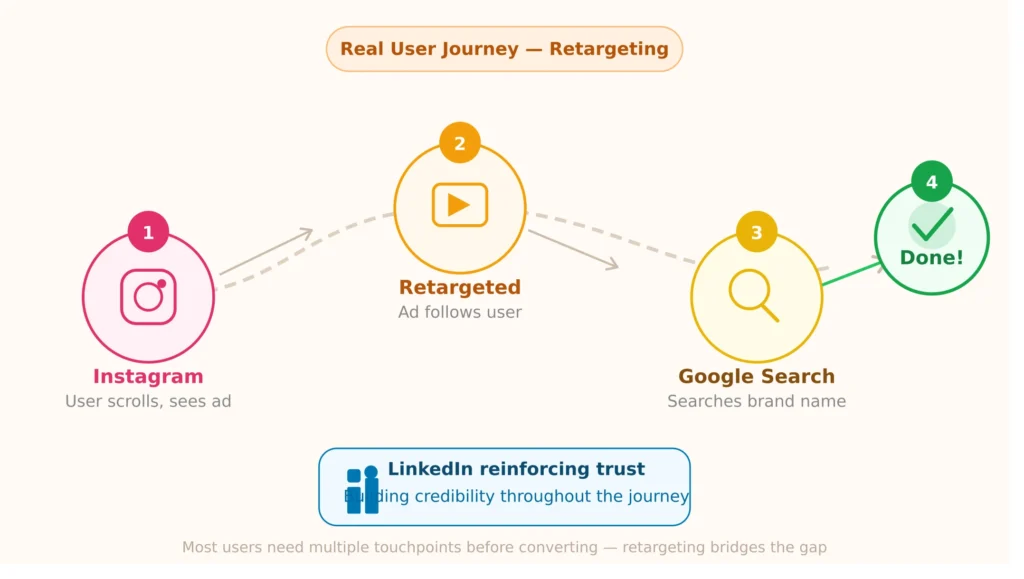
Most users don’t convert immediately.
That’s normal.
What matters is how you follow up.
Modern retargeting goes beyond website visitors. It includes people who engaged with content, watched videos, or interacted with ads. A Best Social Media Marketing Company in Ahmedabad focuses on building these layered touchpoints so that interest is continuously nurtured instead of lost.
This makes follow-up communication more relevant.
And relevance is what turns interest into action.
Where Most Strategies Fall Apart
When campaigns underperform, it’s rarely because of the platform itself.
More often, it’s due to misalignment.
- Expecting instant results from awareness platforms
- Ignoring the role of creative
- Overlooking retargeting completely
- Treating all platforms the same
Avoids these mistakes by aligning strategy with user behaviour, not assumptions.
The One Insight That Changes Everything
If there’s one takeaway, it’s this:
No single platform is enough on its own.
Each one handles a different part of the journey. When combined correctly, they create a system that is both scalable and efficient.
That’s where consistent results come from.
Conclusion: It’s Not About Traffic Anymore
The biggest shift isn’t technical—it’s strategic.
Marketing is no longer just about bringing users somewhere.
It’s about allowing them to act instantly, wherever they are.
A forward-thinking Digital Marketing Company in Ahmedabad understands this and builds strategies accordingly.
And when you reduce steps instead of adding them, performance tends to improve naturally.
Performance Marketing Agency play a key role in making this shift practical by ensuring consistent engagement and faster audience response across platforms.