
Web Development Company in Ahmedabad: Improve Crawlability and Rankings :
Most businesses think SEO starts with keywords or content writing.
But in reality, SEO success starts much earlier — at the level of website structure.
This is something experienced teams at a web development company in Ahmedabad understand very well. Before they touch design or visuals, they focus on how the website will be structured — because structure decides how search engines interpret everything else.
Think of structure as the backbone of your entire SEO strategy. If the backbone is weak, nothing else performs at full strength.
Why Website Structure Is So Important for SEO?
Let’s keep this simple.
Google is not a human. It doesn’t “read” websites like we do.
Instead, it crawls your website using automated bots. These bots move from one page to another by following links. While doing this, Google tries to understand:
1. What your website is about
2. Which pages are most important
3. How different pages are connected
4. Whether your content is organised logically
If your structure is clean and logical, Google understands your site faster and ranks it more confidently.
But if your structure is messy, things break silently:
1. Important pages don’t get discovered
2. Authority gets diluted
3. Crawl budget gets wasted
4. Rankings become unstable
This is not theory — this is how Google’s crawling system works in real life.
In fact, Google has clearly explained the importance of site structure in its official documentation. They explicitly mention that a clear structure helps search engines discover and understand content more efficiently.
That alone tells you how important this is.
How Website Structure Impacts Real SEO Performance?
Let’s go one level deeper.
Website structure affects SEO in three major ways:
First, it controls how easily Google can access your pages. If important pages are buried deep inside your website, Google may not crawl them frequently.
Second, it decides how authority flows across your website. Pages that are well-connected internally get more SEO strength.
Third, it directly affects user experience. If users can’t navigate your website easily, they leave quickly — and that increases bounce rate.
And bounce rate is not just a UX metric anymore. It is a ranking signal.
This is exactly why businesses investing in website design & development services in Ahmedabad often see SEO improvements even without changing their content.
Because structure itself improves both search engine understanding and user behaviour.
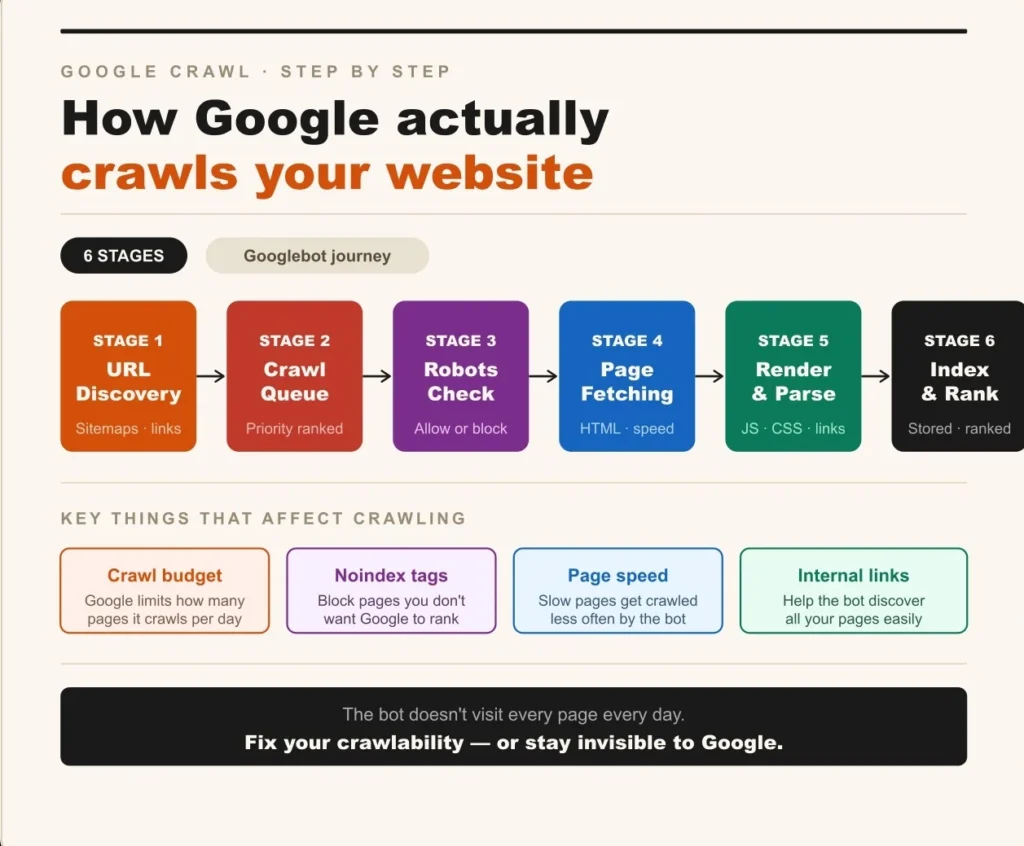
How Google Actually Crawls Your Website?
To understand structure properly, you need to think like Googlebot.
Google starts crawling from your homepage. From there, it follows internal links to discover other pages. It doesn’t randomly guess pages — it strictly depends on how your website is connected.
If your internal linking is strong and logical, Google moves smoothly across your website and builds a clear understanding of your content hierarchy.
But if your website has broken links, missing connections, or poor navigation, Google starts missing pages or prioritising the wrong ones.
This leads to a serious issue: crawl inefficiency.
Crawl inefficiency means Google spends time on unimportant pages while missing important ones. Over time, this directly affects rankings.
That’s why internal structure is often more powerful than external SEO efforts.
What a Proper SEO-Friendly Website Structure Looks Like :
A strong SEO-friendly structure usually follows a clear hierarchy model. At the top is the homepage, which acts as the main entry point. Below it are category or service pages, and under those come detailed supporting pages or blog content.
Businesses investing in web app development services often follow this structured hierarchy to improve crawlability, strengthen internal linking, and achieve better search engine rankings.
This hierarchy helps Google understand which pages are most important and how information is grouped.
For example:
Homepage → Services → Specific Service Pages → Supporting Blogs
This simple structure ensures that authority flows properly across the website.
Digifinity helps businesses scale through smart digital marketing services tailored to their unique needs.
Their approach combines creativity, analytics, and technology for sustainable growth.
Explore Our ServicesKey Elements of a Good SEO Website Structure:
1. Clear Hierarchy
A good structure avoids confusion. Every page should have a clear place in the website hierarchy. Important pages should be closer to the homepage so they get more visibility from search engines.
2. Logical URL Structure
SEO-friendly websites use clean URLs that reflect content structure, such as:
1. /web-development-services/
2. /seo-services/
This helps both users and Google understand the page topic instantly.
3. Strong Internal Linking
Internal linking connects related pages and helps distribute SEO authority across the website. It also improves user navigation by guiding visitors to relevant content.
4. Easy Navigation
Menus should be simple and intuitive. Users should be able to find any important page within a few clicks. Confusing navigation leads to higher bounce rates and weaker SEO performance.
5. Content Clustering (Topic-Based Structure)
Modern SEO websites use topic clusters where one main “pillar page” links to multiple related subtopics. This builds topical authority and improves rankings for competitive keywords.
6. Mobile-Friendly Structure
Since Google uses mobile-first indexing, your structure must work smoothly on mobile devices. Pages should load fast, adapt to screen size, and maintain clear navigation.
For example, when talking about advanced digital solutions, linking naturally to custom software development services in Ahmedabad helps strengthen topical relevance and improves SEO depth.
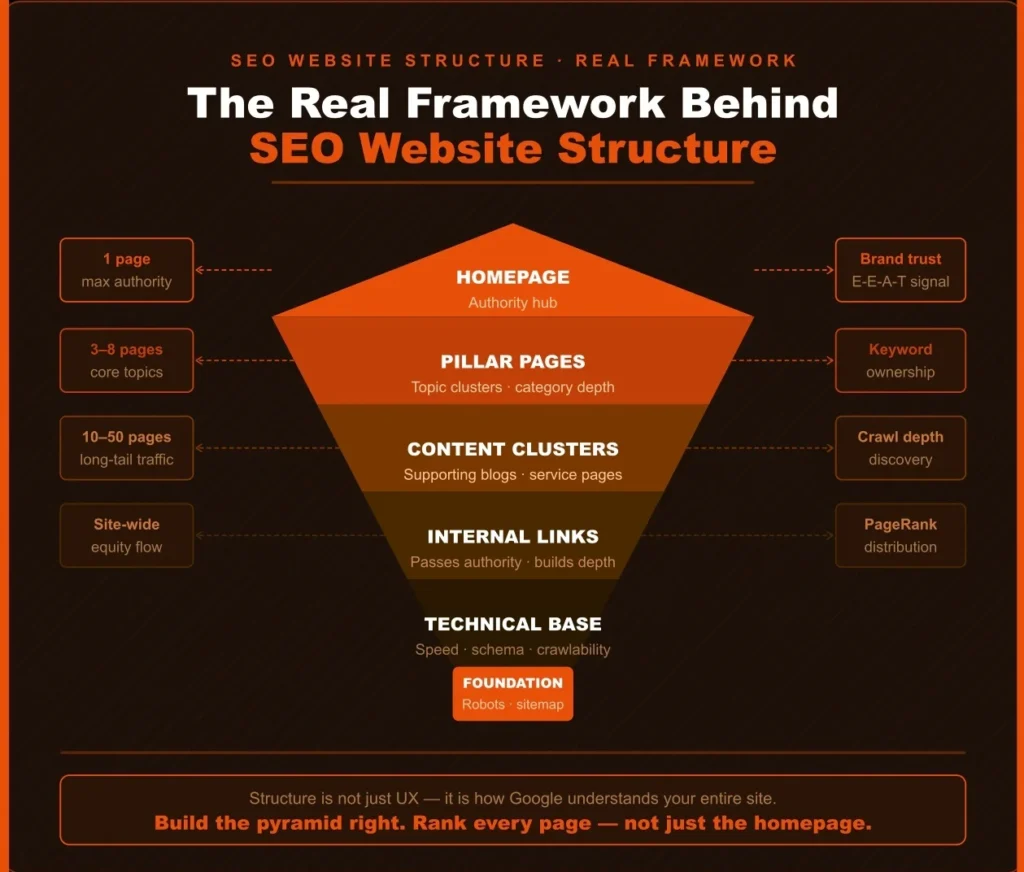
The Real Framework Behind SEO Website Structure:
Good SEO structure is not accidental. It follows a very clear thought process.
It starts with one basic question:
What is the purpose of this page?
If a page does not have a clear purpose, it shouldn’t exist.
Once purpose is clear, the next step is mapping keywords — but not in a robotic way. It’s about understanding user intent. What is the user actually looking for?
This is where cms web development services help in keeping everything structured and easy to manage without making the website messy over time. Then comes grouping. Similar topics should be grouped together instead of being scattered randomly across the website. This creates clarity for both users and search engines.
After that comes navigation design. A good navigation system feels effortless. Users should never feel confused or lost.
Finally, technical SEO ensures everything runs smoothly — from indexing to loading speed.
When all these layers come together, your website becomes a structured system instead of a random collection of pages.
Website Structure Models That Actually Work:
There are many ways to structure a website, but only a few actually perform well in SEO.
The first is the flat structure model.
In this model, most pages are kept close to the homepage. This reduces crawl depth and makes it easier for Google to discover important pages quickly.
The second is the topic cluster model, which is widely used by modern SEO teams.
Here’s how it works:
1. One main pillar page covers a broad topic
2. Supporting pages explore subtopics in detail
3. All pages are internally connected
This creates strong topical authority.
For example, a main page about web development can connect to:
1. CMS development
2. Web applications
3. Mobile app development
This structure signals to Google that your website has depth and expertise.
External research from HubSpot also confirms that topic cluster models significantly improve SEO performance because they strengthen semantic relationships between content.
Why CMS Choice Matters for SEO Structure:
Your CMS is the system that controls everything — content, URLs, navigation, and scalability.
If your CMS is poorly configured, your structure will slowly break as your website grows.
A good CMS should ensure:
1. Clean URL structure
2. Easy internal linking
3. Proper categorisation of pages
4. Scalable architecture
This is where professional cms web development services become important.
Because CMS is not just a tool — it is the foundation of your content system.
Mobile Experience and SEO Structure:
Google now follows mobile-first indexing. This means Google evaluates the mobile version of your website first before desktop.
So if your structure breaks on mobile , even slightly ,your rankings suffer.
A responsive website ensures:
1. Navigation remains usable
2. Content flows properly
3. Pages load efficiently
4. Structure stays intact across devices
This is why responsive web development services and responsive web design services are no longer optional. They are essential for SEO survival.
Internal Linking: The Hidden SEO Power
| Scenario | How Linking Helps | Example with Mobile App Development |
| Visitor lands on homepage | Directs them to key services | Homepage links to Mobile App Development Services so users find app solutions quickly |
| Google crawls your site | Helps discover important pages | Linking from Web App Development Services to mobile app page signals its importance |
| Exploring related services | Keeps users engaged | Blog posts or service pages link to mobile app development, creating a smooth journey through your offerings |
Common Website Structure Mistakes:
Most websites fail because of small structural mistakes that go unnoticed. One major issue is orphan pages — pages that exist but are not linked internally. Google often ignores them completely.
Another issue is inconsistent URL structures, which confuse search engines and split ranking signals. Poor navigation depth is also a problem. If important pages are buried too deep, they lose visibility.
Even broken internal links can disrupt crawl flow. These issues are small individually but harmful collectively, which is why web development services india are often used to properly structure and maintain website architecture.
What Happens When Structure Is Fixed?
There are many real cases where fixing structure alone led to major SEO improvements.
One business had strong content but weak rankings. After restructuring their website improving navigation, fixing URLs, and adding internal links their organic traffic increased by over 60% in a few months.
No new content. No backlinks. Just structure improvement.
This proves one thing clearly: SEO is not only about content. It is about organisation.
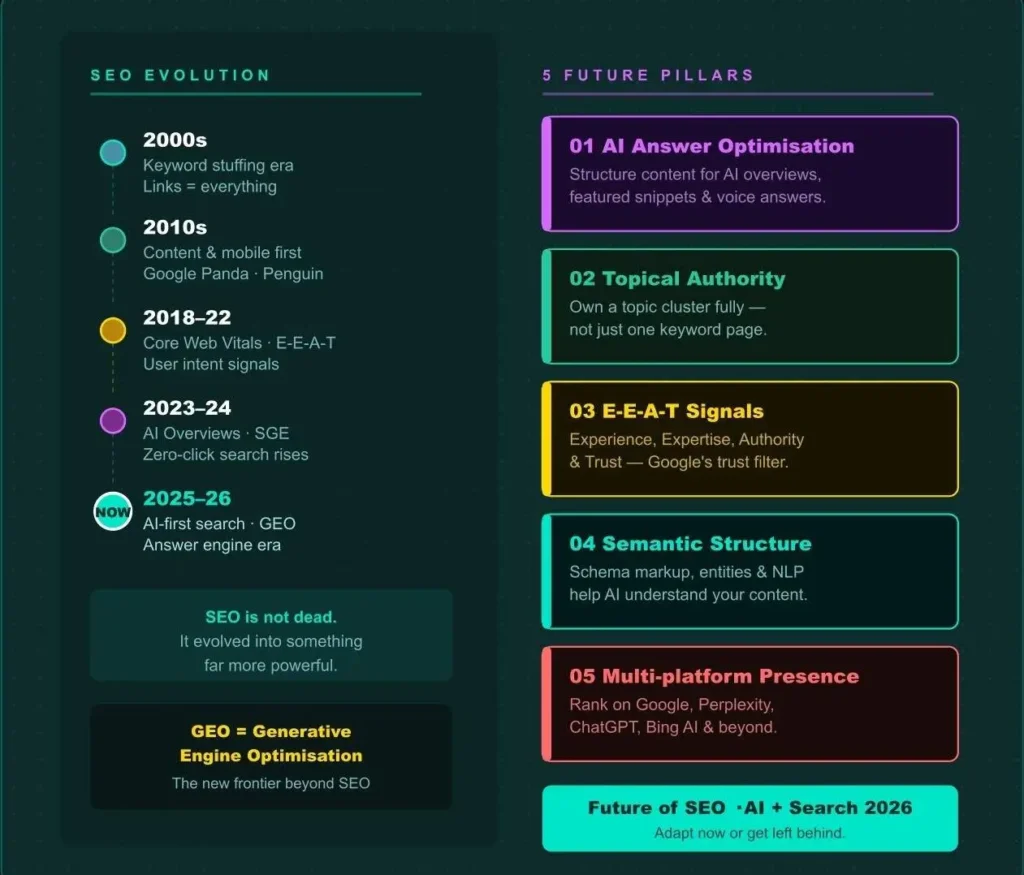
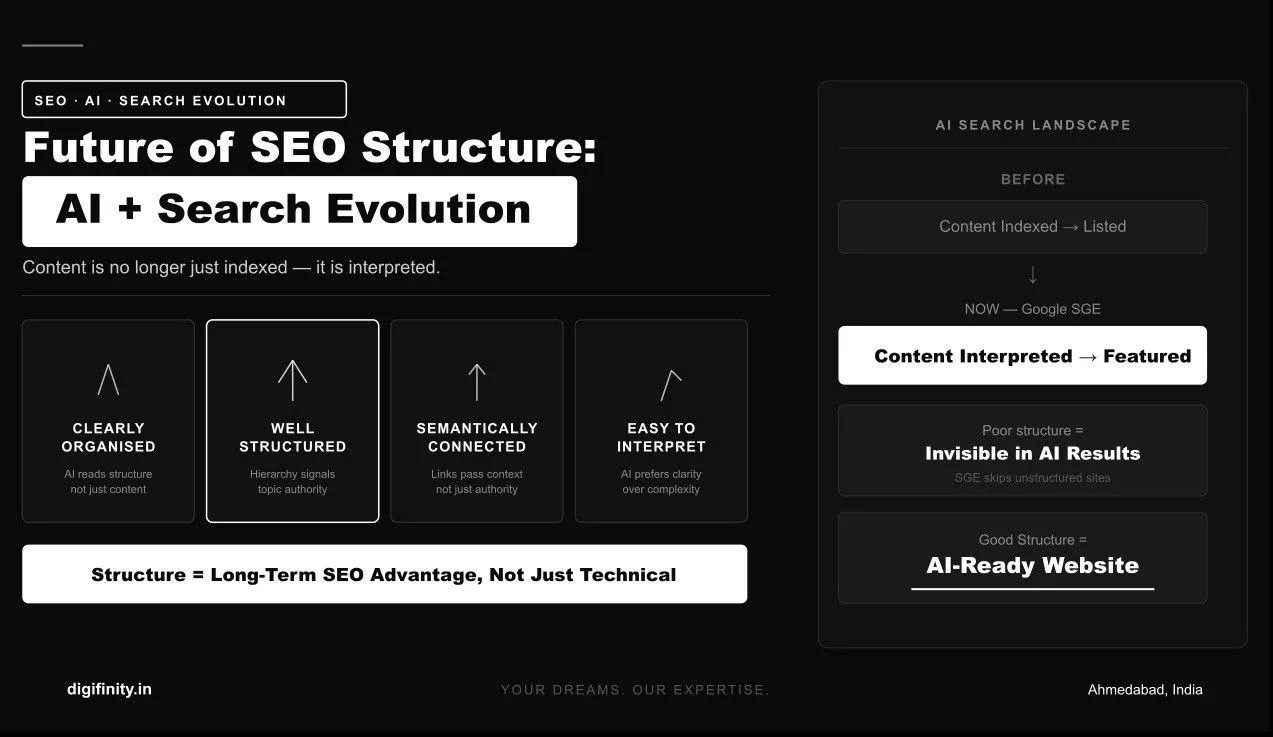
Future of SEO Structure (AI + Search Evolution):
Search engines are changing.
With AI-powered search like Google SGE, content is no longer just indexed — it is interpreted.
This means structure matters more than ever.
AI systems prefer websites that are:
1. Clearly organised
2. Well-structured
32. Semantically connected
4. Easy to interpret
Websites with poor structure will struggle to appear in AI-generated search results.
This makes structure a long-term SEO advantage, not just a technical requirement.
Conclusion:
SEO success does not start with content. It starts with structure.
If your website structure is weak, Google will never fully understand your content — no matter how good it is.
But when structure is strong, everything improves:
1. Rankings
2. Traffic
3. User experience
4. Conversions
That is why working with a web development company in Ahmedabad that understands SEO architecture is one of the most important decisions for long-term growth.